Most homeowners have done it: a thin crack appears along a seam, you fill it with spackle, paint over it, and within a season it is back in exactly the same place. That is not bad luck. A recurring seam crack is telling you something is moving, and the fix has to deal with the movement, not just the line.
This guide explains the usual causes in Florida homes and what a professional seam repair does that a quick fill does not.
Where Seam Cracks Show Up
Location is the first clue:
- Along the joint where the wall meets the ceiling
- Down the middle of a flat ceiling, following a seam
- Above door frames and window corners, often running diagonally
- At inside corners where two walls meet
- Across butt joints, where the short ends of two sheets meet
- Along walls that border a garage or an addition
The Common Causes
Seasonal framing movement
In homes with roof trusses, the bottom of the truss can rise and fall slightly with changes in attic temperature and humidity. That pulls the ceiling drywall up and down relative to the walls and opens a crack at the wall-ceiling corner. It often comes and goes with the seasons. Florida attics swing between very hot and humid in summer and milder in winter, so this pattern is familiar here.
Butt joints
Long seams along the factory-tapered edges of drywall finish flat and strong. The short ends of sheets are not tapered, so the joint sits proud of the wall and has less compound over the tape. Butt joints are more likely to show ridges and cracks.
Missing or poorly bedded tape
Some seams were finished with compound alone, or with tape that was not fully embedded. These crack easily and may also bubble.
Settlement and structure
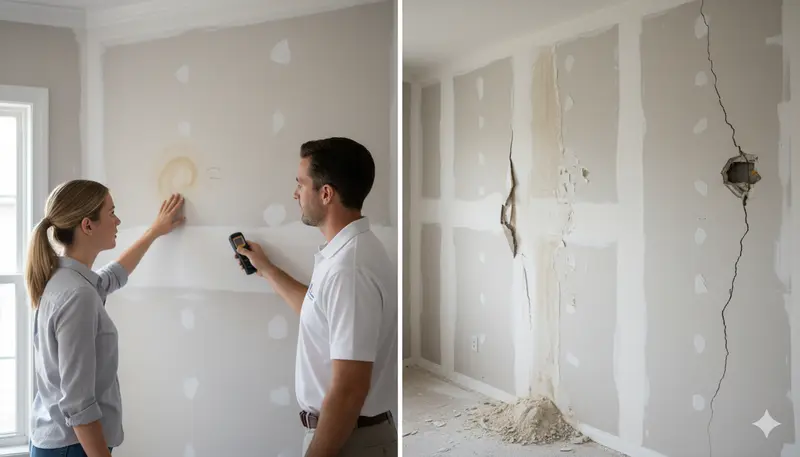
Slab-on-grade homes, common throughout the region, can settle slightly over time. Diagonal cracks from door and window corners are a classic sign of minor movement. Most are cosmetic, but cracks that are widening, uneven floors, or doors that suddenly stick should be looked at by a structural professional before any drywall work.
Moisture
Repeated humidity swings, AC condensate leaks and roof leaks weaken the bond between tape and board. Seams near bathrooms, air handlers and exterior walls are most exposed.
Vibration and impact
Walls next to slamming doors, garage doors or heavy equipment can crack along seams from repeated jarring.
Why a Quick Fill Fails
Spackle and paint fill the gap but add no strength. If the seam moves again, the brittle filler cracks along the same line. In a humid home, filler applied too thick also shrinks as it dries, leaving a dip.
What Professional Seam Repair Does
1. Diagnose before touching it
A good technician looks at where the crack is, its direction, whether it is seasonal, and whether there are moisture or structural signs. That decides the method.
2. Remove what has failed
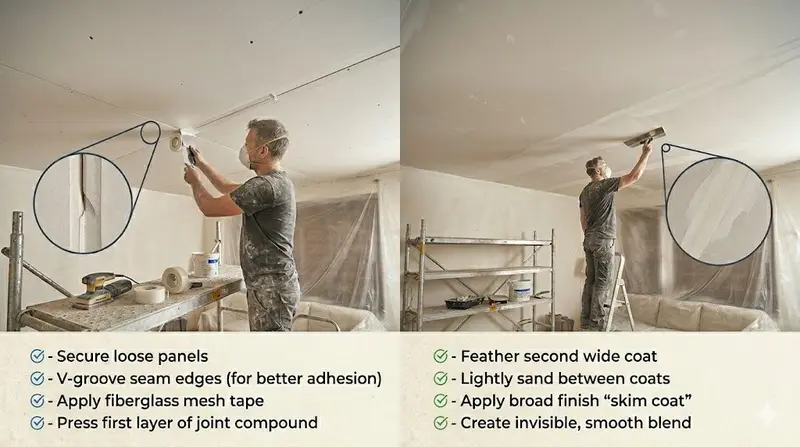
Loose, cracked or bubbled tape is cut out back to a solid bond. Popped fasteners are reset and extra screws added to pull the board tight.
3. Re-tape properly
Fresh paper tape is bedded fully in compound, often with setting-type compound for strength and better performance in humid conditions.
4. Allow for movement where needed
For cracks driven by seasonal framing movement, simply re-taping often fails again. Approaches include:
- Using flexible corner products at wall-ceiling joints
- Re-fastening ceiling board so it is attached in a way that allows truss movement
- Adding a decorative crown moulding that covers the joint, where a homeowner prefers that look
5. Feather and blend
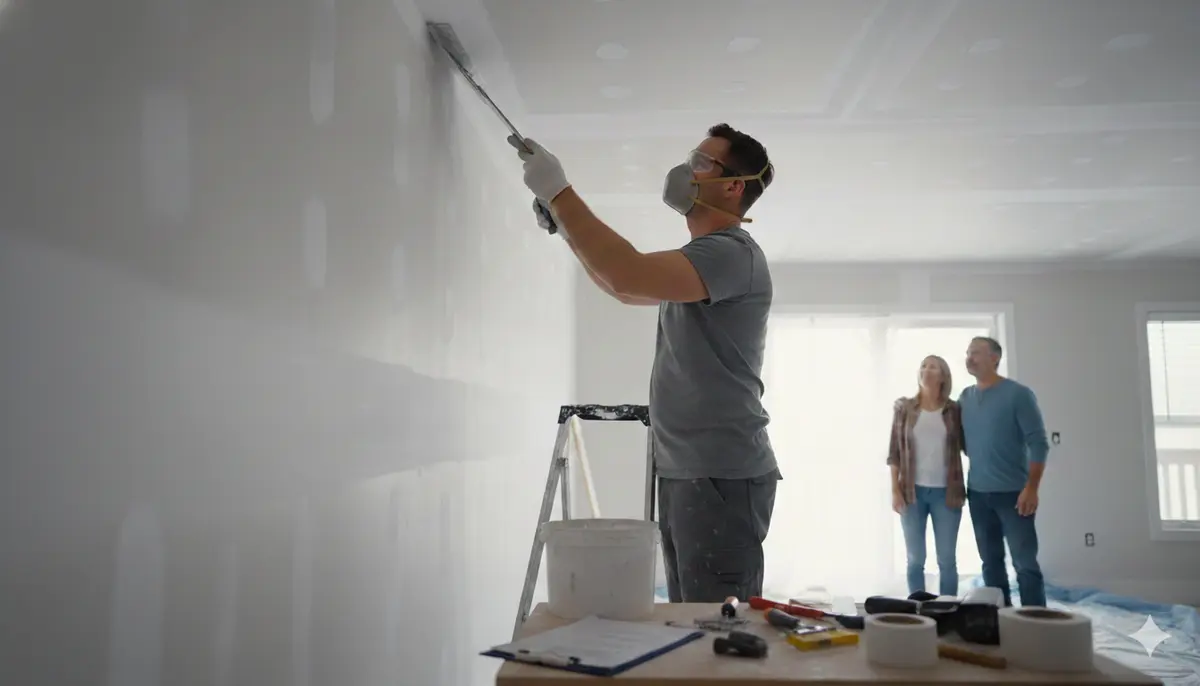
The repair is feathered wide so it does not show as a ridge, then textured to match the surrounding wall or ceiling.
6. Prime and paint
Primer evens out absorption so the seam does not flash through the paint.
You can read more about the full service on our seam and crack repair page. If the cracks appeared after a new AC unit or ductwork was installed, our page on drywall repair after HVAC work covers that scenario too.
Can You Do It Yourself?
A single seam with failed tape in a dry, stable room is a reasonable DIY job; our walkthrough on how to repair drywall seams yourself covers the steps. Recurring cracks, ceiling seams, and cracks linked to movement or moisture are better handled by someone who can diagnose the cause.
Preventing Seam Cracks
- Keep indoor humidity steady with the AC rather than letting the house swing between closed and open
- Have AC drain lines checked regularly
- Fix roof and plumbing leaks quickly
- Avoid hanging heavy items directly over seams without proper anchors
- Install door stops to stop handles and slams jarring walls
Getting a Seam Assessed
The Patch Guyz is a veteran-owned repair team based in Clearwater. Text a photo of the crack, ideally with a wide shot showing where it sits in the room, to 727-242-8500. You will usually get a written quote within the hour, and every repair carries a 1-year written workmanship warranty.