Drywall rarely fails without warning. Long before a ceiling sags or a wall needs replacing, there are small signs: a faint ring, a dimple, a line, a slightly musty smell in a closet. Catching them early is the difference between a quick patch and a much bigger repair.
This guide explains what each sign usually means and offers a simple inspection routine for a Florida home.
The main signs, and what they point to
Stains and discolouration
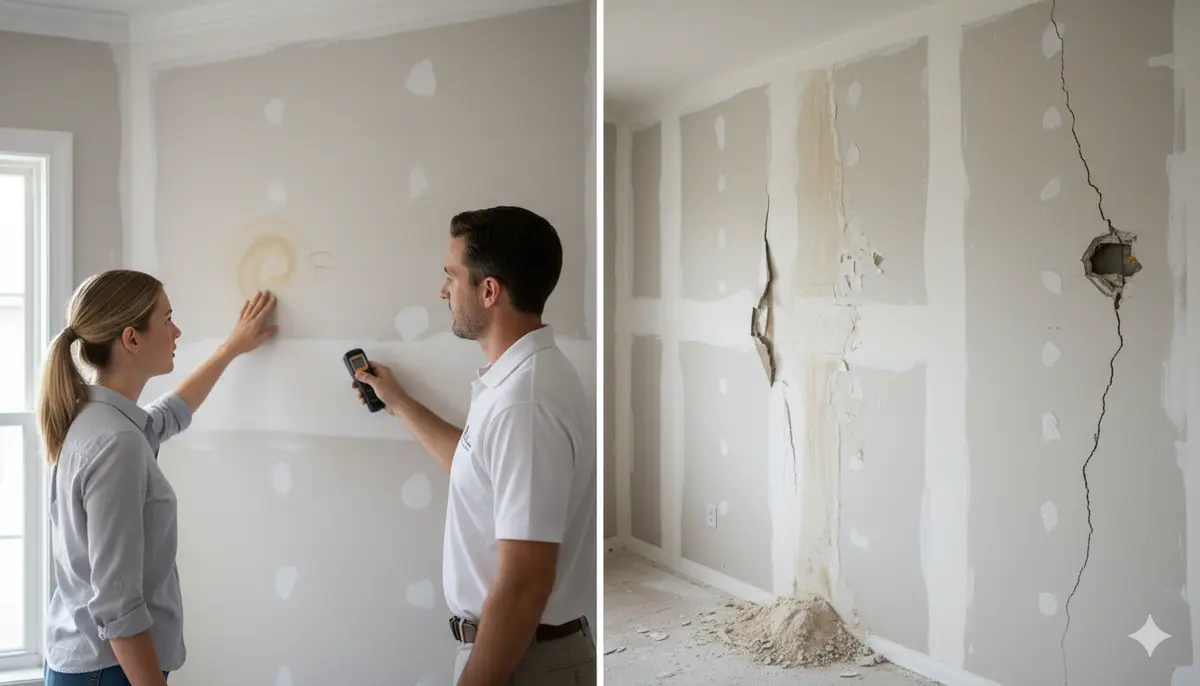
Yellow, brown or grey rings usually mean water has soaked through at some point. A stain that grows or darkens after rain points to a roof or window leak. A stain below a bathroom or near the air handler points to plumbing or AC condensation.
Bubbling or peeling paint
Paint that blisters or lifts away from drywall often has moisture behind it. In bathrooms, it can also mean the room is not ventilated well enough for Florida humidity.
Soft spots and crumbling
Press gently around a stain. If the drywall feels spongy or the surface crumbles, the gypsum core has been weakened by water. Soft drywall usually needs to be cut out, not patched over.
Sagging ceilings
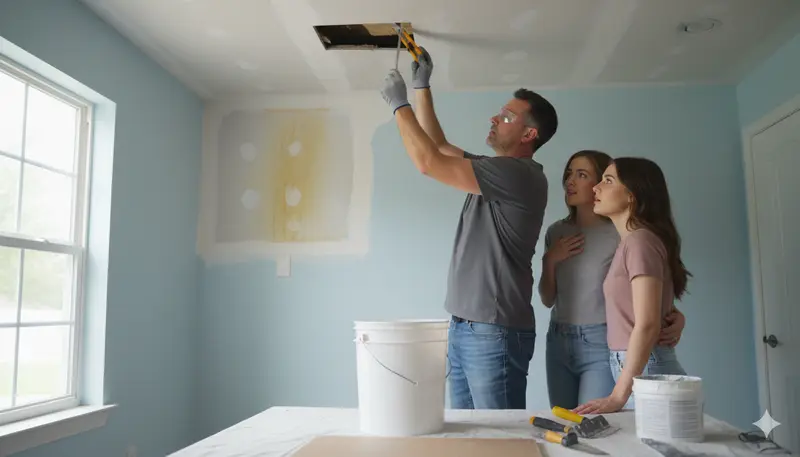
A dip or bulge in a ceiling is a serious sign. It often means water has pooled above or the board has detached from the framing. Keep people out from under it and get it looked at promptly.
Cracks
- Hairline cracks from door and window corners are usually normal movement.
- Straight cracks along seams usually mean the joint tape has failed.
- Wide cracks, or cracks with one side higher, may point to movement worth investigating.
Nail and screw pops
Small round bumps or circles in a row along a wall or ceiling are fasteners pushing through the surface. They are common as framing lumber dries and shifts. They are cosmetic but easy to fix.
Peeling or bubbling tape
Long blisters along seams mean the tape did not bond well when the wall was finished, or moisture has loosened it.
Mould spots and musty smells
Dark speckles on drywall, or a musty smell in a closet or behind furniture, suggest moisture inside the wall. In our climate, mould can develop quickly on wet drywall paper.
Holes and dents
Doorknobs, furniture, moving day and trade work all leave their mark. These are straightforward to repair, but holes left by plumbers and electricians are worth checking for moisture or damage inside the cavity.
A simple room-by-room inspection routine
Set aside half an hour a couple of times a year – after the rainy season is a good time – and walk the house with a flashlight.
- Ceilings first. Look for rings, dips and cracks, especially below bathrooms, near AC vents and along exterior walls.
- Bathrooms and laundry. Check around tubs, showers, toilets and behind the washer.
- Kitchen. Look under the sink, behind the fridge water line and around the dishwasher.
- Exterior walls. Check below windows and around sliding doors, where wind-driven rain gets in during storms.
- Closets and corners. Musty smells often show up first in closed spaces.
- Garage walls. Look for dents, water lines and tape failure.
Tools that help
- A bright flashlight held at a low angle shows bumps and ridges
- A basic moisture meter confirms whether a stain is still wet
- Your phone camera to record changes over time
How urgent is it?
Sort what you find into three groups:
- Act today: sagging ceilings, active drips, soft spots that are growing
- Act soon: new stains, mould spots, bubbling paint, cracks that widen
- Plan a repair: old dry stains, nail pops, hairline cracks, small holes
Patch or replace?
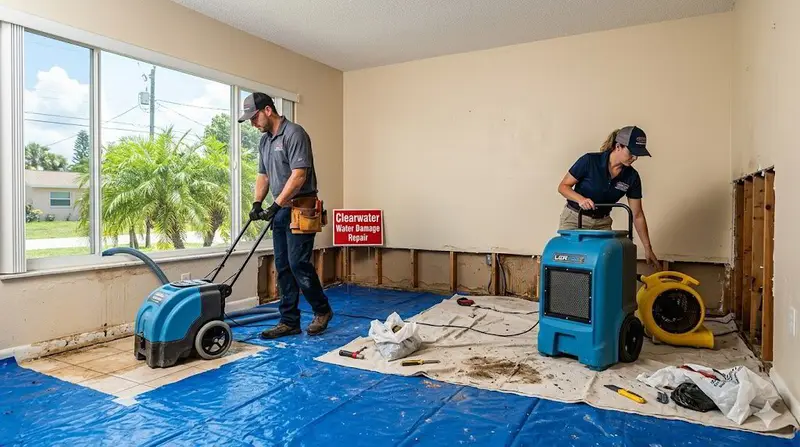
Patching works for dents, holes, cracks, nail pops and old dry stains once primed. Replacing a section makes sense when drywall is soft, mouldy, sagging or has been wet for a long time. Our guide to repairing water-damaged drywall covers that process in detail.
If your home was built before the mid-1980s and the damaged ceiling has popcorn texture, have it tested for asbestos before cutting or scraping.
Getting a second opinion
If you are not sure what you are looking at, take a photo. The Patch Guyz offers free virtual estimates – text a picture to 727-242-8500 and you will get a written estimate, usually within the hour. Our drywall repair page covers common fixes, and if the damage followed a leak repair, see our repairs after plumbing work. Homeowners in Pasco County can also visit our Wesley Chapel ceiling repair page.