
After the Plumber Leaves
Drywall Repair After a Plumbing Leak or Pipe Repair
Your plumber stopped the leak; the hole in the wall is still there, and the drywall around it may still be wet. We confirm the cavity has dried, cut out board that will not recover, replace soaked insulation, and patch walls and ceilings so the repair disappears under fresh paint.
- Veteran-owned
- Background-checked techs
- 1-year written warranty
- Text-a-photo quotes
Free estimate in about an hour
- Text a photo to 727-242-8500
- Written quote = final price
- HEPA dust control on every job
- Walkthrough before you pay
What we repair after plumbing work
Plumbers open walls and ceilings to find leaks, replace valves and reroute pipes. Their job ends with dry, working plumbing; closing the wall is left to someone else. That is where we come in.
The damage usually falls into two groups. The first is clean access holes: square openings behind a shower valve, under a sink, below a toilet supply, or a row of cuts along a wall for a repipe. The second is water damage: stained ceilings below a bathroom, swollen baseboard-height drywall from a supply line or water heater failure, and board that crumbled when the leak was found.
On slab-on-grade homes, which are common across Florida, a slab leak or failed line under the floor often shows up as damp drywall at the bottom of a wall. Water wicks up the gypsum core, so the damage frequently extends higher than the visible tide line. We account for that when we decide where to cut.
Dry first, patch second
The most common mistake after a leak is closing the wall too soon. Drywall that looks dry on the face can still be wet in the core, the bottom plate and the insulation behind it. Sealing that moisture in with fresh compound and paint invites staining, softening and mould.
Before we patch, we check the board and the framing with a moisture meter, comparing readings against an unaffected wall in the same room. Open access holes actually help here: they let air reach the cavity. Fans and a dehumidifier speed things up, and after larger leaks a water mitigation company may already have drying equipment in place.
If readings are still elevated, we tell you and come back when they have dropped. Waiting a few extra days is far cheaper than redoing a stained patch.
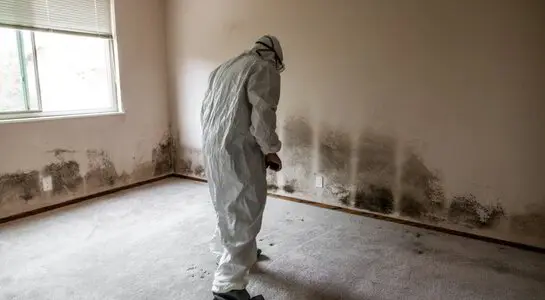
Mould awareness after a leak
Florida's warm, humid air means a wall cavity that stays damp can grow mould surprisingly fast. While we are cutting and patching we look for warning signs and will point out anything we see: dark speckling on the back of the drywall, discoloured framing, or a persistent musty smell.
The Patch Guyz do not perform mould remediation or mould testing. If there is visible growth beyond a small area, or an odour that does not clear after drying, we recommend having a licensed mould assessor or remediation company evaluate it before the wall is closed. Once that work is done and the area is cleared, we install new drywall and finish it to match.
For bathrooms, laundry rooms and spots next to water heaters, we can use moisture-resistant board in the replacement section.
Where plumbing damage usually shows up
Ceilings under bathrooms
A failed wax ring, shower pan or supply line upstairs tends to show as a yellow-brown ring on the ceiling below, sometimes well away from the fixture because water runs along the joists first.
Kitchen sink and dishwasher walls
Slow drips from a trap or dishwasher hose soak the cabinet back and the drywall behind it. The damage is often found only when the cabinet is emptied.
Laundry and water heater corners
A burst washer hose or a tank that let go floods the floor, and the bottom of nearby walls wicks the water up. These areas benefit from moisture-resistant board.
Shower valve walls
Replacing a valve or cartridge often means a square opening on the wall behind the shower, in a closet or bedroom. We close it or frame an access panel.
Repipe runs
A repipe can leave a line of small openings along hallways and ceilings. Each one is closed and blended so the whole wall can be painted in one pass.
Plaster walls in older homes
Leaks behind original plaster need a different approach, with bonding agents and plaster-compatible fill. Our plaster repair specialists handle those walls.
Patch, or replace the wet drywall?
Our rule of thumb is to keep what is sound and remove what is not:
Patch when the plumber made a clean access hole and the surrounding board is firm and dry.
Seal and repaint when a ceiling stain has fully dried and the drywall has not softened or sagged.
Replace when the board is soft, crumbly, swollen at the bottom edge, or the paper face is peeling away from the core.
Replace when a ceiling sags between joists, since gypsum that has been saturated loses its strength and does not recover.
Replace the insulation when it got wet. Damp insulation holds moisture against framing and new drywall and should come out before the wall is closed.
Cut above the damage line when water wicked up from the floor, so the new board sits on dry material.
Our repair process after a leak
Inspect and meter
We look at the opening and the surrounding surfaces, take moisture readings and confirm the plumbing repair is finished and holding.
Cut to clean, square edges
Ragged access holes and damaged board are trimmed back to a neat rectangle of sound drywall, centred on framing where possible so the new piece has solid support.
Install backing and new board
We add wood backers where a seam would otherwise float, then screw in drywall of the same thickness, using moisture-resistant board in wet rooms.
Tape and finish
Joints are taped and filled with setting compound for the first coats, then topped and feathered beyond the patch so no edge shows.
Seal, texture and prime
Leftover stains get a stain-blocking primer, the wall or ceiling texture is matched, and the surface is primed and ready for paint.
Getting ready for your repair
Text photos of the opening and any stains to 727-242-8500, ideally with a note about when the leak happened and when it was fixed. You will usually receive a written quote within the hour, and that quote is the final price.
Before we arrive, leave access holes open so the cavity keeps drying, empty cabinets under sinks if we are working there, and move furniture back from the wall. If the plumber installed a new shower valve, think about whether you want a removable access panel there for the future; we can frame and finish around one.
We protect floors and use HEPA dust control on every job. Most small patches are finished in two to four hours; larger repairs that need texture and dry time usually take one to three days. Before you pay, we walk the work with you, and it is backed by a one-year written workmanship warranty.
Related services that often come up after leaks: ceiling and wall drywall repair for impact and wear damage elsewhere, cutting in new sections of drywall when part of a wall is too damaged to patch, and our guide to ceiling stains from AC condensation when the water came from the air handler. We cover all six counties we serve; city homeowners can start at our Tampa wall and ceiling repair page or see drywall help across Hillsborough County.
Drywall Repair After Plumbing Work across West Central Florida
We provide this service in all six counties. Choose your area for local details.
- Drywall Repair After Plumbing Work in Manatee County
- Drywall Repair After Plumbing Work in Pasco County
- Drywall Repair After Plumbing Work in Sarasota County
- Hillsborough County drywall contractors
- Pinellas County drywall contractors
- Polk County drywall contractors
- Manatee County drywall contractors
- Pasco County drywall contractors
- Sarasota County drywall contractors
Frequently Asked Questions
How long should a wall dry before the plumber's hole is patched?
It depends on how much water got in. A clean access hole with no leak damage can be closed right away. After a real leak, the cavity often needs several days with airflow, longer for saturated insulation or framing. We check with a moisture meter rather than guessing, and patch only when readings are back to normal.
Can water-damaged drywall be dried out and kept?
Sometimes. If the board got briefly wet, dried quickly and is still firm with its paper bonded, sealing and repainting can be enough. Drywall that sagged, swelled, softened or lost its paper face should be replaced, because the gypsum core does not regain its strength.
Will you fix the hole my plumber cut behind the shower?
Yes. We can close it permanently with drywall finished to match, or frame a clean opening for a removable access panel so the valve can be reached again without cutting. If tile surrounds the area, tell us so we can plan the approach.
Do you handle mould if you find it?
No. We do not test for or remediate mould. If we see growth or smell persistent mustiness, we stop and recommend a licensed mould assessor or remediator. Once they have finished and the area is cleared, we replace and finish the drywall.
Do you only repair leak damage in Hillsborough County?
No. This page sits under Hillsborough County, but we repair drywall after plumbing work in Hillsborough, Pinellas, Polk, Manatee, Pasco and Sarasota counties. Send photos and your address for a written quote.
Keep exploring
Tell us about the damage
Send the details and a photo through the form and we reply with a written quote, usually within the hour. The quote is the final price.
- Free virtual estimate, no obligation
- Veteran-owned, background-checked technicians
- HEPA dust control on every job
- 1-year written workmanship warranty
Get Your Free Estimate Today
Fill in your details and we'll respond within the hour — often in minutes.
Prefer not to use the form? Text a photo to 727-242-8500 or call 1-877-728-2448.
Ready for a flawless repair?
Text a photo, call for a free estimate, or send the form. We serve Tampa, Clearwater, Lakeland, Bradenton, Sarasota and all of West Central Florida.
Or text a damage photo to 727-242-8500 for a written quote, usually within the hour.