
Nail Pop Repair
Drywall Nail Pop Repair That Stays Fixed
Those small round bumps and hairline rings on your walls and ceilings are nail pops. They are one of the most common patch calls we get, and fixing them properly means re-fastening the board, not just smearing compound over the top.
- Veteran-owned
- Background-checked techs
- 1-year written warranty
- Text-a-photo quotes
Free estimate in about an hour
- Text a photo to 727-242-8500
- Written quote = final price
- HEPA dust control on every job
- Walkthrough before you pay
What a nail pop actually is
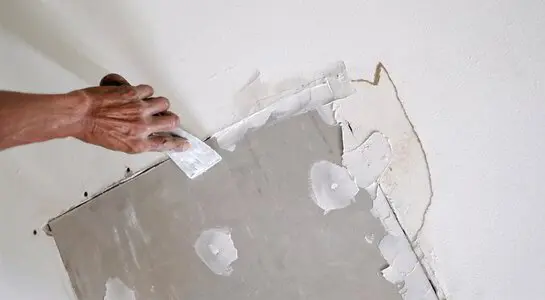
A nail pop happens when a fastener that holds the drywall to the framing works loose and pushes outward. Sometimes the head itself pokes through the paint. More often you see a small raised disc, a crescent-shaped crack, or a ring of flaking compound where the head used to be hidden.
The important detail is that the nail rarely moves on its own. Usually the board has separated from the stud or joist, leaving a gap, and the fastener is just the visible symptom. Press near a pop and you may feel the sheet flex or hear a faint click. That movement is what we fix.
Why nail pops show up in Florida homes
Owners of newer houses are often surprised to see pops within the first year or two. That is normal, and it is rarely a sign of anything serious.
Framing lumber shrinking
Studs and joists still hold moisture when a house is built. As air conditioning dries them out, the wood shrinks slightly away from the back of the drywall and the nail heads are left standing proud.
Truss movement overhead
Roof trusses can flex with heat in the attic, lifting or dropping a little through the year. Ceiling pops and small cracks near the wall line often trace back to this seasonal movement.
Furring strips on block walls
On many block homes the exterior walls are finished with drywall fastened to thin wood strips. Those strips can twist or loosen, and fasteners driven into them are more likely to back out.
Nails instead of screws
Older houses were often hung with ring-shank nails, which grip less than drywall screws. A missed stud, an overdriven head that tore the paper, or a fastener placed too near an edge also leads to pops.
Our screw-and-reset repair method
The goal is to pull the board back against the framing first, then make the spot disappear under paint.
Find the framing and confirm the gap
We locate the stud or joist and press the sheet to see how much it moves. Pops usually run in a line, so we check the neighbouring fasteners along the same member too.
Drive new screws beside the pop
A coarse-thread drywall screw goes in an inch or two above and below the old nail while the board is held tight. The heads sit just under the face without breaking the paper.
Reset or remove the old nail
The original nail is either pulled out or tapped below the surface so it can never push through again. Loose compound and broken paint around it are scraped away.
Fill, sand and blend
Every head gets two or three thin coats of compound, each feathered wider than the last, then a light sanding under HEPA dust control. Texture is matched where the surface needs it.
Prime and touch up
Raw compound is primed so it does not flash through the finish, and we touch up paint on the repaired spots so they blend with the wall around them.
Why a dab of spackle does not last
It is tempting to fill a pop and move on, and for a few weeks it looks fine. The problem is that the loose board is still loose. Every time a door closes, the AC cycles or the trusses move, the sheet shifts against the old head and the fresh filler cracks or bulges out again.
Hammering the nail back in has a similar weakness. The hole it sits in is already enlarged, so it has little grip left, and the hammer blow often crushes the gypsum core and leaves a dent that is harder to hide. Adding a screw that pulls the board tight is what stops the cycle. It takes a few extra minutes per fastener, but it is the difference between a repair and a cover-up.
Pops alongside other damage
Nail pops are rarely the only thing a homeowner wants fixed. A line of pops across a ceiling often comes with a hairline crack at a seam, and we treat both in the same visit. If you are also seeing longer fractures overhead, our page on repairing cracked ceilings explains how we tape and stabilise those. A scattering of small dings, dents and leftover hanger holes can be grouped together under our small drywall repair work, so you are not paying for separate trips.
Pops on their own are cosmetic. If one area shows wide cracks, doors that suddenly stick, or a sagging ceiling, that goes beyond a patch, and we will tell you plainly to have the structure looked at first.
Getting your nail pops fixed
Nail pop repair is part of our wider drywall repair service, and we handle it routinely for homeowners, landlords and agents getting a house ready to list.
Text a photo or two of the pops to 727-242-8500 and we send a free written quote, usually within the hour.
Mark every pop you can find with painter's tape before we arrive, so none are missed.
The written quote is the final price, and we walk through the finished spots with you before payment.
Our work carries a 1-year written workmanship warranty.
We cover six counties; see the towns we serve or send us a message to book.
Nail Pop Repair in your town
We fix this across six West Central Florida counties. Pick your town for local details.
Frequently Asked Questions
Are nail pops a sign of a structural problem?
Almost never. Pops are a normal result of framing drying and moving slightly after the drywall is hung. They become worth a closer look only when they come with wide or growing cracks, a sagging ceiling, or doors and windows that suddenly bind. In that case we recommend having the structure checked before any cosmetic work.
Will the nail pops come back after you fix them?
The spots we repair are re-fastened with screws that pull the board tight, so those particular fasteners should stay put. A house can still develop new pops in other places as framing continues to settle, particularly in the first couple of years. Our workmanship warranty covers the repairs we make.
Should I wait to fix pops in a newly built home?
Many owners wait until after the first full year, once the lumber has dried out and most of the movement has happened. Then every pop in the house can be handled in one visit. If the pops bother you sooner, they can be fixed at any time.
Do you repaint the whole wall after fixing nail pops?
No. We prime and touch up the repaired spots so they blend in. We do not offer full-room repainting, so if a wall's paint is badly faded or the original color is unknown, a small difference in sheen can show, and you may want a painter for a full coat.
Can you fix nail pops on a textured ceiling?
Yes. After re-fastening and filling, we recreate the surrounding knockdown or orange peel texture over each spot before priming. Popcorn ceilings in homes built before the mid-1980s should be tested for asbestos before anything disturbs them.
Keep exploring
Tell us about the damage
Send the details and a photo through the form and we reply with a written quote, usually within the hour. The quote is the final price.
- Free virtual estimate, no obligation
- Veteran-owned, background-checked technicians
- HEPA dust control on every job
- 1-year written workmanship warranty
Get Your Free Estimate Today
Fill in your details and we'll respond within the hour — often in minutes.
Prefer not to use the form? Text a photo to 727-242-8500 or call 1-877-728-2448.
Ready for a flawless repair?
Text a photo, call for a free estimate, or send the form. We serve Tampa, Clearwater, Lakeland, Bradenton, Sarasota and all of West Central Florida.
Or text a damage photo to 727-242-8500 for a written quote, usually within the hour.