
Wall & Ceiling Repairs
Wall and Ceiling Repair in Florida That Disappears Into the Room
Holes, cracks, leak stains, sagging panels and patches that never quite matched. The Patch Guyz repair drywall and plaster walls and ceilings across six West Central Florida counties, finding the cause first and then rebuilding the surface so the repair blends in.
- Veteran-owned
- Background-checked techs
- 1-year written warranty
- Text-a-photo quotes
Free estimate in about an hour
- Text a photo to 727-242-8500
- Written quote = final price
- HEPA dust control on every job
- Walkthrough before you pay
What wall and ceiling repair actually includes
Most damage we see falls into one of three groups: physical damage (door-knob holes, furniture dings, anchors pulled out of the wall), moisture damage (roof leaks, AC condensate overflows, a shower valve weeping into the wall behind it) and movement damage (seam cracks, nail pops, corner cracks over doors and windows). Each group needs a different fix, and the fix for a ceiling is rarely identical to the fix for a wall.
This page is the overview. If the problem is a single hole or a damaged panel in gypsum board, our drywall repair service page walks through patch types in more depth. Older homes with lath-and-plaster or plaster-on-block walls need different materials, which we cover under plaster wall and ceiling restoration. And if the ceiling you want fixed is covered in acoustic spray, see popcorn ceiling removal before anything gets scraped, because those textures may need an asbestos test first.
Whatever the surface, the goal is the same: a repair that is flat, solid, matched to the surrounding texture and ready for paint, with the reason for the damage dealt with rather than covered up.
Why ceilings fail differently from walls
A wall only has to stand up. A ceiling has to hang on fasteners against gravity, sit under the attic heat and catch every drip from above. That changes how we diagnose and repair it.
Leaks from above
Roof leaks, a clogged AC condensate line in the attic, or a supply line at an upstairs bathroom all show up as a brown ring on the ceiling first. The stain is a symptom; we want the source confirmed fixed before we close anything up.
Sagging between joists
Wet gypsum loses strength and starts to belly between framing members. Sag also shows up where board was hung too thin for the joist spacing or where fasteners were spaced too far apart. A sagging section is replaced, not pushed back up.
Cracks along the wall-ceiling line
Roof trusses can lift slightly as attic temperature and humidity swing, pulling the ceiling away from interior walls. Re-taping that joint with rigid compound often fails again, so we choose a method that tolerates the movement.
Nail and screw pops
Framing lumber shrinks as it dries, and fasteners that were driven too deep or too shallow work loose. We reset them with screws, then cover and feather the heads so they stop telegraphing through paint.
How a wall or ceiling repair is done, step by step
The method scales from a fist-sized hole to a full ceiling bay, but the order of operations stays the same.
Look past the stain
We check affected areas with a moisture meter, look into the cavity when there is an opening, and ask what has changed recently: a new AC unit, a roof repair, a plumber visit. If there is still active moisture, the drywall work waits until it is fixed.
Protect the room and contain dust
Floors and furniture are covered, doorways are sealed with plastic where needed and HEPA dust control runs on every job. Ceiling work generates the most debris, so we set up before the first cut.
Cut back to sound material
Damaged board is cut out in a clean square or rectangle until the edges are dry and firm. Small openings get wood backing screwed behind the edges; larger ones are cut back to the center of the nearest studs or joists so the new piece has framing to land on, with added blocking where an edge would otherwise float.
Hang, tape and fill
New board is matched to the existing thickness and screwed off. Joints are taped, and the first fill coat is usually a setting-type compound because it hardens chemically, shrinks less and is not held up by humid air. Lighter premixed compound is used for the topping coats, each one feathered wider than the last.
Texture, prime and walk through
The surface is sanded flat, the existing texture is reproduced, and the patch is primed so it takes paint the same way as the wall around it. We walk the repair with you before payment.
Repair it or replace it? How we make the call
Most damage can be repaired. A hole, a crack, or a stain on board that has dried out and stayed firm is a patching job, and patching keeps cost and disruption down.
We recommend replacing the damaged section rather than patching it when:
- the gypsum core is soft, crumbling or delaminating from its paper face
- there is mold growth on the back of the board or in the cavity
- a ceiling has sagged in one area rather than just cracked
- the area already carries several old patches and the surface is no longer flat
- the board was saturated by flood or storm water, not a short drip
That is our damaged drywall replacement service. When damage covers most of a ceiling or several walls, it is a job for a general contractor or drywall installer, and we will tell you that up front instead of patching something that will fail again. Either way your written quote is the final price.
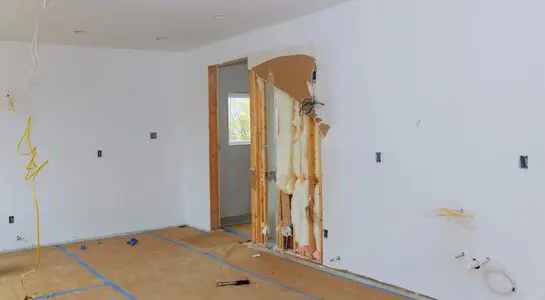
Florida conditions that shape every repair
Humidity is the big one. Joint compound that dries overnight in a dry climate can stay soft for much longer in a closed-up Florida house, and paint laid over damp compound blisters. We run the air conditioning or a dehumidifier during the job, lean on setting compound for the deep fills, and do not prime a patch until it is fully dry.
Construction style matters too. Many homes here sit on concrete slabs with block exterior walls, so outside walls are often drywall on furring strips or plaster applied directly to block. A crack on one of those walls behaves differently from a crack on a wood-framed interior partition. Hurricane season adds roof leaks and wind-driven rain, and coastal air can rust metal corner bead from the inside out.
We work across Hillsborough, Pinellas, Pasco, Polk, Manatee and Sarasota counties. If you are in the Tampa area, our Tampa drywall contractors page has local detail, and the wider Hillsborough County service overview lists the communities we cover. North of the city, we also run a dedicated ceiling repair service for Wesley Chapel homeowners.
Getting ready, and what repair day looks like
A little preparation keeps the visit short. Here is what helps, and what you can expect from us.
Send clear photos to 727-242-8500, including one close-up and one wide shot showing the whole wall or ceiling. A written quote usually comes back within the hour.
Clear small items, wall art and anything fragile from the work area. We can move light furniture; heavy or valuable pieces are best moved beforehand.
Confirm any leak has been repaired by a plumber or roofer, and let us know if the area got wet recently.
Tell us about the paint: the color name, sheen, or a leftover can if you have one. It makes blending easier.
Most small patches take two to four hours. Larger repairs that need texture and dry time between coats usually run one to three days.
Expect plastic, drop cloths and some noise, but not a dusty house. Before payment we walk the finished work together, and it is covered by a 1-year written workmanship warranty.
Matching the finish is half the job
A repair that is structurally perfect still fails if the eye can find it. On Florida walls that usually means reproducing orange peel or knockdown; on ceilings it can be knockdown, skip trowel, a sand finish or smooth. We test the spray pattern on a scrap of board before it touches your wall, and we feather texture past the patch edge so there is no hard border. The texture matching service page covers each finish type and how it is reproduced.
Lighting is the final judge. Low-angle light from a window or a ceiling fixture exposes ridges that look fine head-on, so we inspect with a work light held flat to the surface before priming.
Wall & Ceiling Repair across West Central Florida
We provide this service in all six counties. Choose your area for local details.
- Wall & Ceiling Repair in Polk County
- Wall & Ceiling Repair in Manatee County
- Wall & Ceiling Repair in Sarasota County
- Hillsborough County drywall contractors
- Pinellas County drywall contractors
- Polk County drywall contractors
- Manatee County drywall contractors
- Pasco County drywall contractors
- Sarasota County drywall contractors
Frequently Asked Questions
Can a water-stained ceiling be repaired without cutting it out?
Often, yes. If the leak is fixed and the board is dry and firm, we seal the stain with a stain-blocking primer so it cannot bleed through, then repaint. If the board is soft, sagging or shows mold, that section is cut out and replaced. A moisture reading and a press test tell us which situation you have.
My ceiling is sagging. Is it dangerous?
A sag means the board has lost strength or its fasteners are failing, and a wet sag can drop without much warning. Keep people out from under it, turn off any light fixture in that area, and call us or a roofer or plumber to stop the water. Sagging sections are replaced rather than screwed back up.
Do you repair walls and ceilings in plaster homes too?
Yes. Plaster over lath and plaster applied directly to concrete block both need different patching materials from gypsum board. Danny, our plaster specialist, handles those repairs so the new work bonds properly and matches the hard, dense surface around it.
Will I need to repaint the whole room after a repair?
Not always. If you have the original paint and it has not faded, we can often prime and paint the patched area so it blends. Older or sun-faded paint may need the full wall repainted corner to corner so the color reads evenly. We will tell you which is likely when we quote.
Which areas do you cover for wall and ceiling repair?
We serve homeowners, landlords, property managers and contractors across Hillsborough, Pinellas, Pasco, Polk, Manatee and Sarasota counties from our base in Clearwater. Text a photo of the damage for a free virtual estimate wherever you are in that area.
Keep exploring
Tell us about the damage
Send the details and a photo through the form and we reply with a written quote, usually within the hour. The quote is the final price.
- Free virtual estimate, no obligation
- Veteran-owned, background-checked technicians
- HEPA dust control on every job
- 1-year written workmanship warranty
Get Your Free Estimate Today
Fill in your details and we'll respond within the hour — often in minutes.
Prefer not to use the form? Text a photo to 727-242-8500 or call 1-877-728-2448.
Ready for a flawless repair?
Text a photo, call for a free estimate, or send the form. We serve Tampa, Clearwater, Lakeland, Bradenton, Sarasota and all of West Central Florida.
Or text a damage photo to 727-242-8500 for a written quote, usually within the hour.