Drywall is mostly gypsum wrapped in paper, and both hate water. Gypsum softens and crumbles when it stays wet. The paper face is food for mold. In a Florida house, where indoor air is already humid for much of the year, a wet wall can stay wet for a long time unless someone helps it dry.
This guide covers the full repair, in the order it needs to happen.
Step Zero: Stop the Water
No drywall repair should start until the source is fixed. Common culprits in this region:
- Roof leaks and wind-driven rain during hurricane season and summer storms
- AC condensate lines and drain pans that clog and overflow
- Supply lines to toilets, sinks, ice makers and washers
- Leaking shower valves and failed tile grout
- Window and slider leaks on block walls
If the leak came from plumbing behind the wall, a plumber will usually open the wall to reach it. That opening becomes part of your repair. Our page on drywall repair after a plumbing leak covers that situation specifically.
Assess What You Have
Visual signs
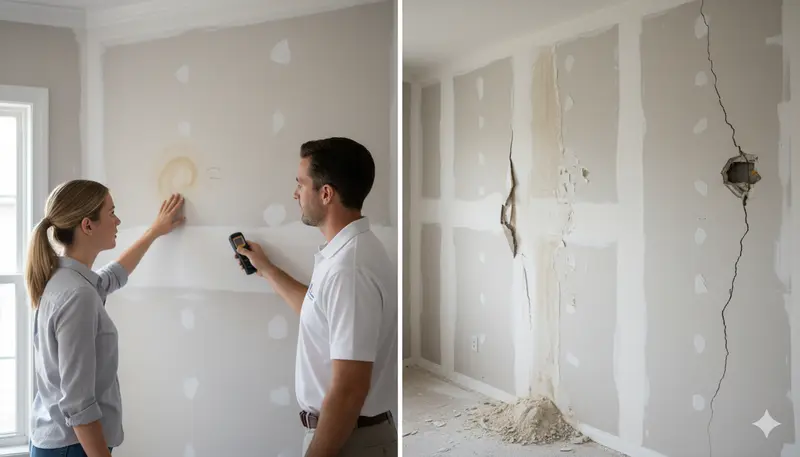
- Yellow or brown stains, often with a darker ring at the edge
- Bubbling, blistering or peeling paint
- Swollen or warped baseboards and door casings
- Sagging between ceiling joists
- A musty smell, even when nothing is visible
Touch and tools
Press the area gently with your palm. Firm drywall feels like the wall around it. Soft, spongy or crumbly drywall has lost its strength and must come out.
A pin-type moisture meter is the most useful tool in this whole process. Take readings in the stained area and on a known-dry section of the same wall, then compare. Keep checking outward until the readings match the dry wall. That tells you where the wet area actually ends, which is often beyond the visible stain.
When to stop and call for help
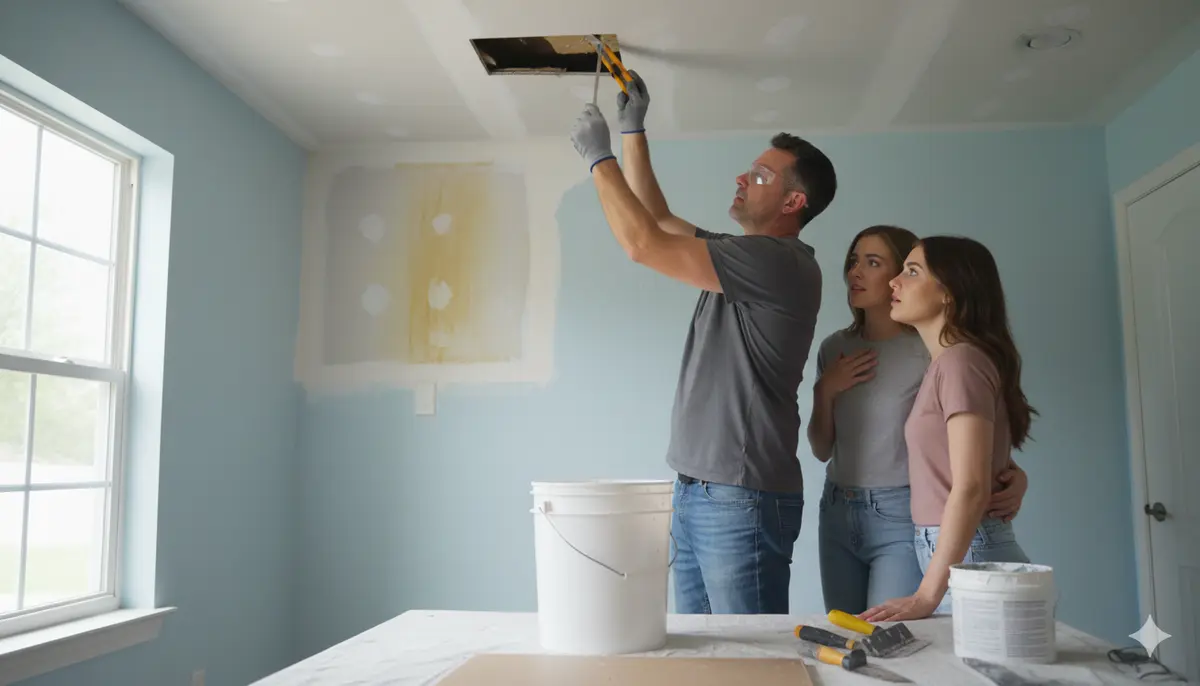
- A ceiling that is sagging or bulging. It can hold water and come down suddenly. Keep people out of the room and, if safe, poke a small hole at the low point to drain it into a bucket.
- Visible mold larger than a small spot.
- Water that came from outside after a flood or storm surge, which carries contamination.
- Popcorn ceilings in homes built before the mid-1980s. Get an asbestos test before disturbing them.
Can Wet Drywall Be Saved?
Sometimes. If the drywall was wet briefly with clean water, still feels firm, has no swelling, and dries back to normal readings quickly with fans and dehumidification, it can often stay. It will need a stain-blocking primer before paint.
If it is soft, sagging, crumbling, smells musty, or stayed wet for days, cut it out. Painting over wet or damaged drywall only hides the problem.
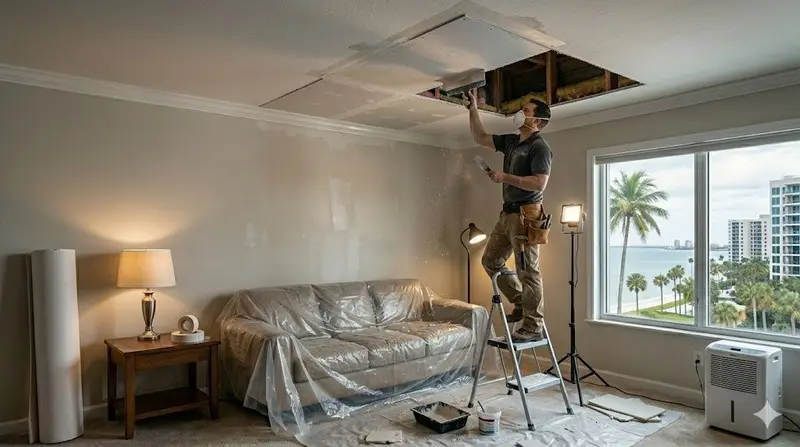
How to Cut Out Damaged Drywall
- Turn off power to any outlets or switches in the area.
- Mark a rectangle that extends past the wet area, ideally to the center of the nearest studs on each side so the new piece has something to attach to.
- On walls with flood damage, many pros cut a straight line at a set height above the water line along the whole wall, which makes replacement simpler.
- Score with a utility knife, then cut with a drywall saw, keeping the blade shallow.
- Remove wet insulation as well. It holds moisture against the framing.
- Inspect the studs, plates and the back of the remaining drywall for mold and rot.
Dry the Cavity Completely
This is the step people rush. With the wall open:
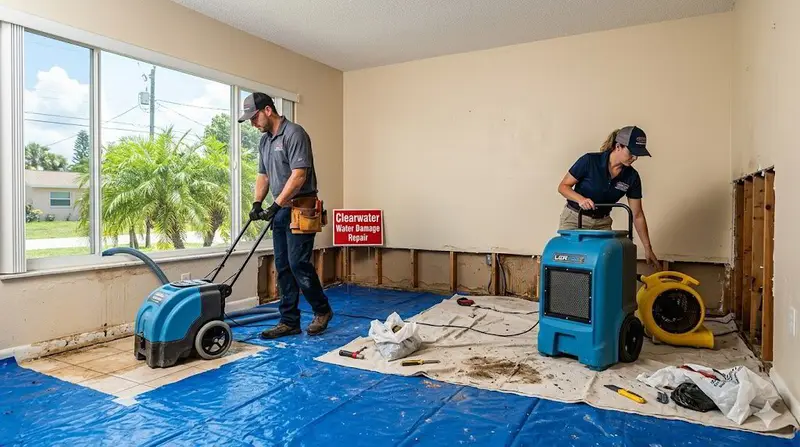
- Run fans across the opening and a dehumidifier in the room.
- Keep the AC running and the house closed.
- Re-check the framing with the moisture meter over the next few days.
Closing the wall while the studs are still damp traps moisture inside, which is how mold problems start.
Rebuild the Wall
Hang new drywall
- Cut a replacement piece to fit the opening. In bathrooms and laundry areas, moisture-resistant board is a sensible choice.
- Add wood backers where an edge does not land on a stud.
- Screw the piece in place with screws slightly below the surface.
Tape and finish
- Bed paper tape in setting-type compound on every seam.
- Apply two more coats, each wider and thinner than the last.
- Sand lightly, checking with a light held at a low angle.
Prime and paint
Use a stain-blocking primer over any remaining stained areas, then prime the new board. Match the wall texture before painting. For ceilings with knockdown or orange peel, texture matching is often harder than the drywall work itself.
Preventing the Next Leak
- Have the AC condensate line flushed and the drain pan checked regularly, especially before summer.
- Inspect caulk around tubs, showers and windows each year.
- Replace aging braided supply lines.
- Walk the attic after big storms with a flashlight.
- Keep indoor humidity under control with the AC so walls can dry if they do get wet.
For more prevention ideas aimed at coastal homes, see these water damage repair tips for Clearwater homeowners.
When to Hand It Off
Small, clean-water repairs on walls are within reach for a careful DIYer. Ceilings, large areas, textured surfaces and anything involving mold are where professional wall and ceiling repair earns its keep.
The Patch Guyz handles the drywall side once the source is fixed and the area is dry. Text a photo to 727-242-8500 for a written quote, usually within the hour. HEPA dust control is standard, and every job is covered by a 1-year written workmanship warranty.