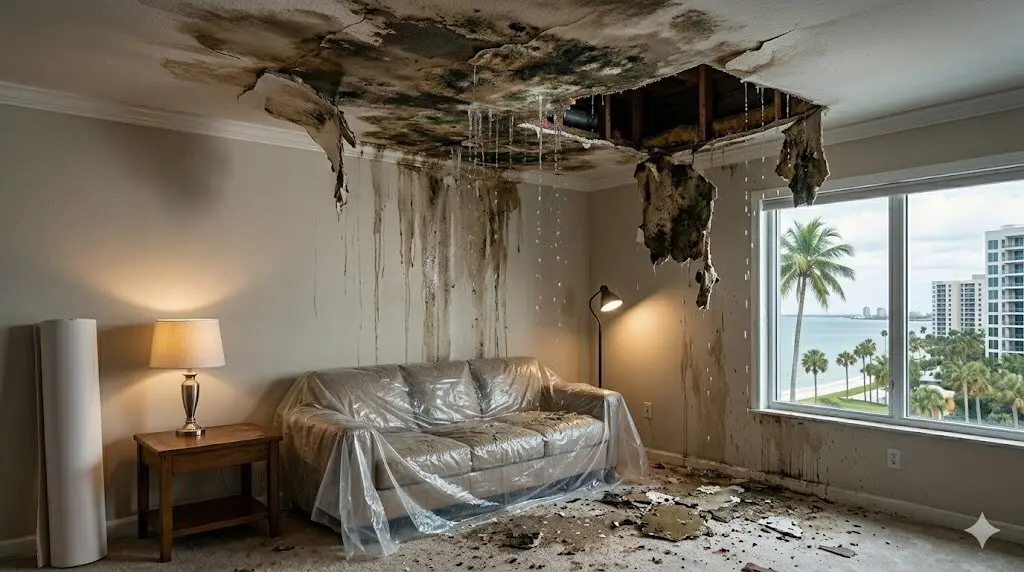
A brown ring appears on the ceiling after a storm. Or water drips from a light fixture. Or the ceiling under the upstairs bathroom has started to sag. Your first question is not really "which company is best?" It is "who do I call first?"
Ceiling leak repair is almost always a sequence: find and stop the water, dry what got wet, then rebuild and refinish the ceiling. Different specialists handle different steps. This guide compares your options so you call the right people in the right order.
Right Now: Safety First
- If the ceiling is bulging or sagging, keep people and pets out from under it. It can hold water and fail suddenly.
- If water is near light fixtures or outlets, switch off that circuit at the panel.
- If safe, put a bucket under the low point and poke a small hole there to let trapped water drain in a controlled way.
- Move furniture and electronics out of the area.
- Take photos before you clean up. Your insurer may want them.
Step 1: Identify the Likely Source
Where the stain sits and when it appears are your best clues.
Roof leaks
- Stains appear or grow after rain, especially wind-driven storms
- Often near exterior walls, chimneys, skylights, vents or valleys
- Call: a roofer
AC leaks
- Stains near the air handler closet or below attic equipment
- Appear in hot, humid weather when the AC runs hard, not necessarily after rain
- Often caused by a clogged condensate drain line or a rusted drain pan
- Call: an HVAC technician
Clogged condensate lines are one of the most common causes of ceiling stains in Tampa Bay homes because AC runs for so much of the year.
Plumbing leaks
- Stains below bathrooms, kitchens or laundry rooms on a floor above
- Present regardless of weather
- Call: a plumber
Condensation
- Spotty discoloration near ductwork or poorly insulated attic areas
- Call: HVAC technician or insulation contractor
Step 2: Stop the Water
No ceiling repair should start until the source is fixed. Comparing options at this stage means comparing roofers, plumbers or HVAC techs on their diagnosis. A good one will tell you exactly what failed and show you.
Step 3: Drying and Mitigation
For a small, clean leak that was caught quickly, fans, a dehumidifier and the AC may be all you need. For larger leaks, a water mitigation company brings drying equipment and moisture monitoring. Call one if:
- A large area of ceiling or insulation got soaked
- Water spread into walls or flooring
- The leak went unnoticed for days
- There is visible mold or a strong musty smell
Step 4: Drywall Ceiling Repair
Once the source is fixed and the area is dry, the ceiling itself needs rebuilding. This is where your main options are:
DIY
Fine for a small, firm stain that only needs stain-blocking primer and paint. Not a good idea for sagging drywall, large sections or textured ceilings that need matching.
General handyman
Can handle simple patches. Results vary on ceilings, especially with texture matching and wide feathering under raking light.
Drywall repair specialist
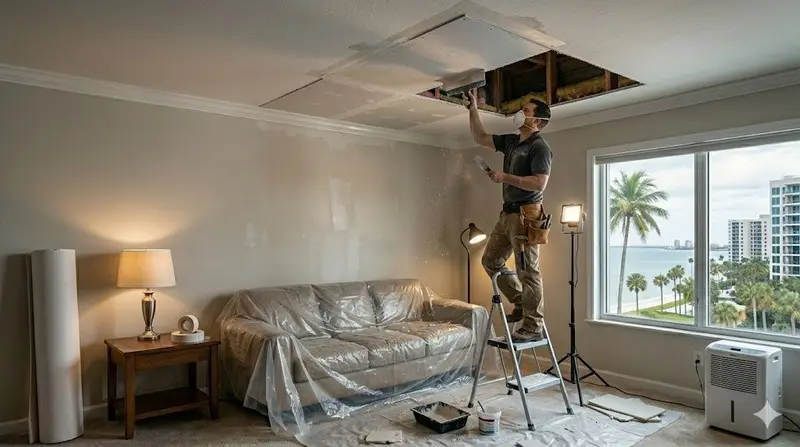
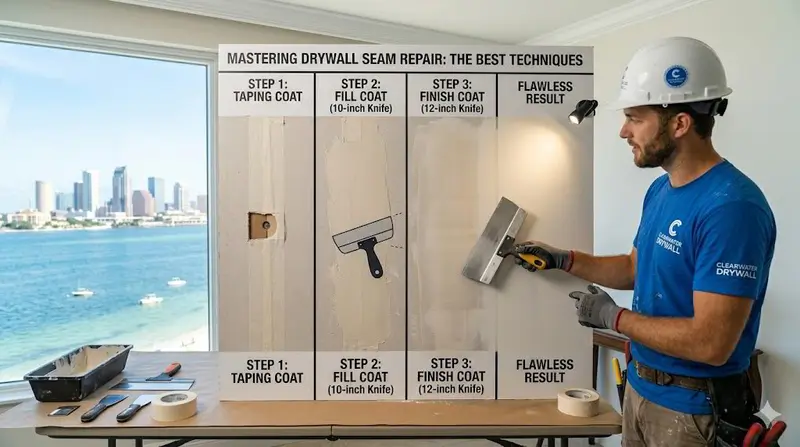
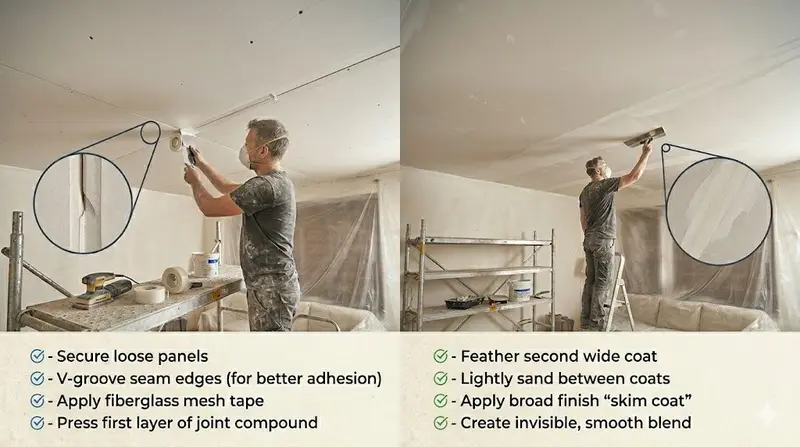
Set up specifically for this: cutting out damaged board, replacing it, taping, texture matching, stain blocking and painting, with dust control in an occupied home. This is the most reliable choice for anything larger than a small stain.
General contractor
Worth calling if the leak caused damage beyond drywall: framing, flooring, cabinets and electrical, and you want one company to manage it all.
How to Compare Drywall Repair Options
When you get quotes for the ceiling itself, check:
- Will they confirm the area is dry before starting?
- Do they replace soft or sagging sections rather than paint over them?
- Is texture matching included?
- Is stain-blocking primer included?
- Is the quote the final price?
- Is there a written warranty?
Older Ceilings
If the home was built before the mid-1980s and the ceiling has popcorn texture, have it tested for asbestos before any repair. Wet popcorn can also be messy to work with, and cutting into it releases material into the air.
Insurance Notes
Sudden leaks are treated differently from long-term seepage by most policies. Document everything, keep receipts from the plumber or roofer, and ask your drywall contractor for a detailed written quote and photos. Read your policy or ask your agent about coverage; your contractor cannot decide that.
Where The Patch Guyz Fits
We handle step four: the drywall and ceiling repair once the source is fixed and the area is dry. We are veteran-owned, based in Clearwater, and serve six counties around Tampa Bay. If a plumber had to open your ceiling to reach the leak, our page on drywall repair after plumbing work explains that service. For broader stain and sag repairs, see our ceiling and wall repair page, and if you are in Pasco, our Wesley Chapel ceiling repair page covers that area.
For a detailed look at the repair process itself, read our guide to professional water damage ceiling repair in Florida.
Text photos of the stain to 727-242-8500 for a free virtual estimate, usually returned within the hour.