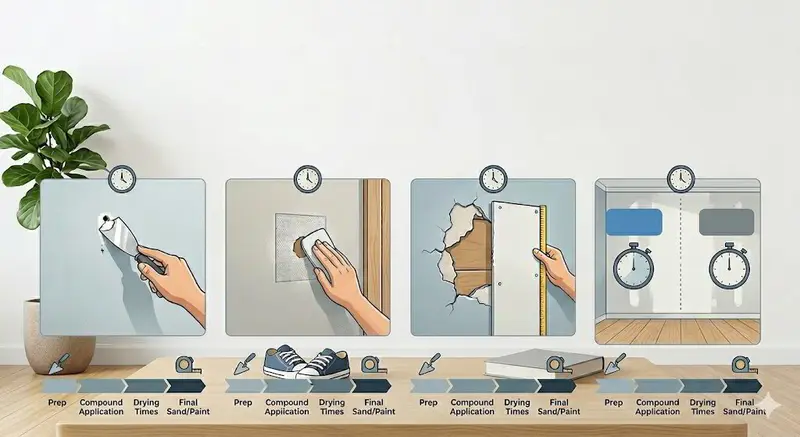
Most people searching for someone to patch drywall have the same small, annoying list: a doorknob hole behind the bedroom door, a couple of anchor holes where a TV mount used to be, a square opening the plumber left in the hallway, and a crack above a window that keeps coming back.
None of these is a renovation. They are patching jobs, and knowing what a good patching service includes helps you compare offers and avoid paying twice.
What Counts as a Patching Job
Patching services usually cover repairs that do not need whole sheets replaced:
- Holes from doorknobs, furniture, falls and moving day
- Openings cut by plumbers, electricians, HVAC installers and cable techs
- Anchor, screw and nail holes from shelves and mounts
- Cracks at seams, corners, doors and windows
- Popped screws and nails
- Small water-stained or soft sections once the leak is fixed
- Dents and gouged corners
If a whole wall is damaged, or several sheets need to come out, that moves into replacement or renovation work.
What a Complete Patch Should Include
The difference between a patch you notice and one you forget about is in the steps after the hole is filled. A complete service should include:
- Cutting back damaged material to sound drywall, not filling over crumbling edges
- Backing or support for anything larger than a hand
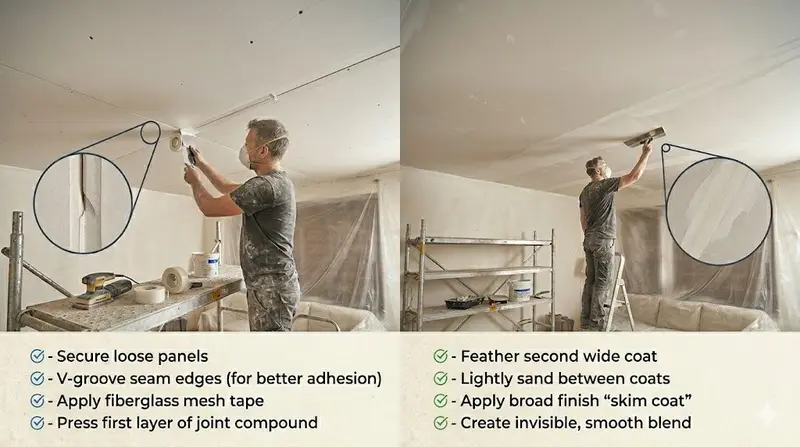
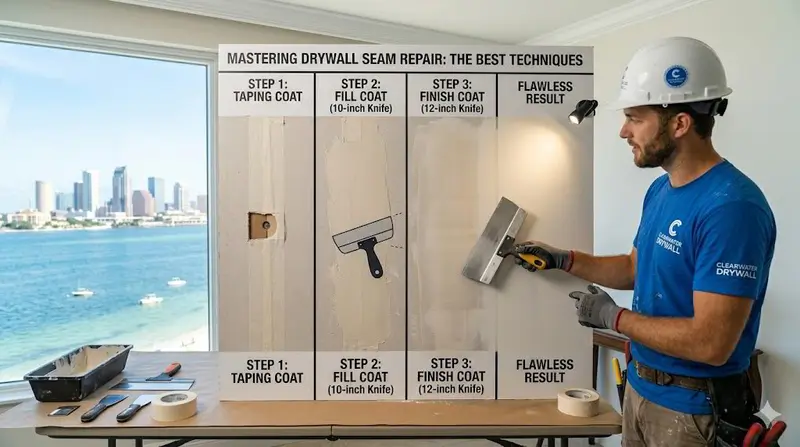
- Taping and multiple feathered coats of compound
- Sanding with dust control
- Texture matching so the patch blends with orange peel, knockdown or smooth walls
- Priming the repaired area
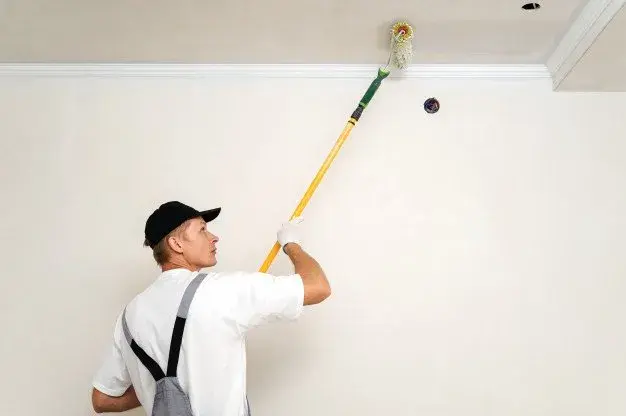
- Paint, or at least a paint-ready finish, depending on what you agree
Ask specifically about steps five through seven. Some quotes stop at "patched" and leave you with a bright white square on a textured, painted wall.
Paint-Ready vs. Painted
There are two common ways patching jobs finish:
- Paint-ready. The repair is primed and textured, and you or your painter apply the final colour. This works well if you have leftover paint or are repainting the whole room anyway.
- Painted. The service paints the repair. Touching up a single spot rarely blends perfectly on an older wall because paint fades and sheen changes. Painting corner to corner on the affected wall gives the most even result.
Neither is wrong; just make sure the quote says which one you are getting.
How to Get an Accurate Quote From Photos
Many patching jobs can be quoted without a visit. To get an accurate number on the first try, send:
- A wide photo showing the whole wall or ceiling, so the estimator can see light, height and texture
- A close-up of each repair with a tape measure or coin in the frame for scale
- A close-up of the surrounding texture, taken at an angle
- A note on what caused the damage, especially if water was involved
- Whether you want it painted or left paint-ready
The Patch Guyz offers free virtual estimates this way. Text your photos to 727-242-8500 and you will usually have a written quote within the hour. That written quote is the final price.
Preparing the Room
A little prep makes the visit faster and cleaner:
- Move furniture and wall hangings about an arm's length away from the repair, or tell the crew which pieces need moving
- Clear shelves near the work area
- Keep pets and kids out of the room during sanding
- Have your paint can handy if you are matching an existing colour, or note the brand and colour name
- Make sure the AC is running so compound dries properly
A good crew will still lay drop cloths and mask off the area. The Patch Guyz uses HEPA dust control on every job, which keeps fine sanding dust out of the rest of the house.
How Long Patching Takes
Most patching jobs are about drying time more than labour. A small hole can be filled, sanded, textured and primed in a short visit when fast-setting compound is used. Larger repairs and multiple coats may need a return trip. For a fuller breakdown by repair type, see how long drywall repair takes.
Bundling Small Repairs
Because a lot of the effort is travel, setup and clean-up, one visit for several patches is usually more sensible than calling each time something happens. Walk the house before you request a quote and list everything: anchor holes, nail pops, that crack in the closet. Landlords and property managers often do this between tenants.
When to DIY Instead
Tiny nail holes on a smooth wall with leftover paint are easy weekend fixes. Anything on a ceiling, on textured surfaces, in bright rooms, or connected to a past leak is where a professional drywall patch and repair service gives a cleaner result. If the opening was left by another trade, our page on fixing damage left by contractors explains how those repairs are handled.
Before booking, it is worth reading what to expect from a repair visit so you know how scheduling, protection and the final walkthrough work.