Ask a drywall technician how long a repair will take and the honest answer is: the work is quick, the drying is not. Cutting out damage and fitting a patch may only take minutes. Building up smooth, invisible layers of joint compound takes time, because each coat has to dry before the next one goes on.
Here is what to expect for common repairs, what changes the schedule, and how to plan around it in a Florida home.
Why drywall repair takes longer than it looks
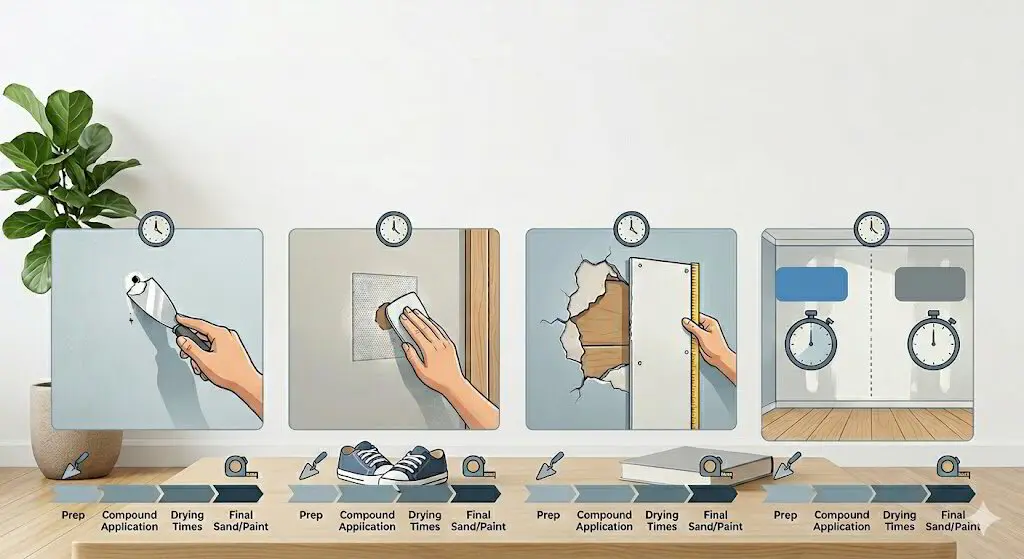
A finished repair normally goes through these stages:
- Prep – cut out damaged material, add backing if needed, fit the patch
- Tape coat – embed paper or mesh tape in compound
- Fill coat – build up the area and start feathering it out
- Finish coat – a thin, wide final layer for a seamless surface
- Sanding and texture – smooth the repair and match the surrounding finish
- Primer and paint – seal the compound so it does not show through
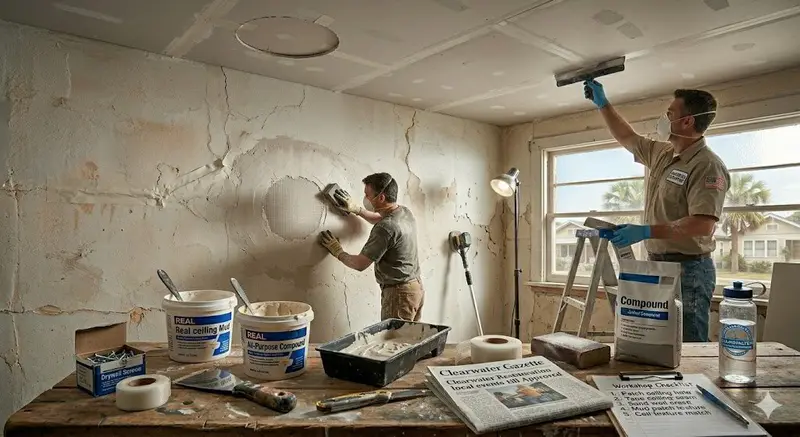
Each compound coat needs to dry. Standard premixed compound is usually left overnight in normal conditions. That is why many repairs are spread over more than one visit.
Typical timelines by type of repair
These are general ranges for a single area. Multiple rooms, high ceilings or matching complex texture will add time.
Nail holes, small dents and screw pops
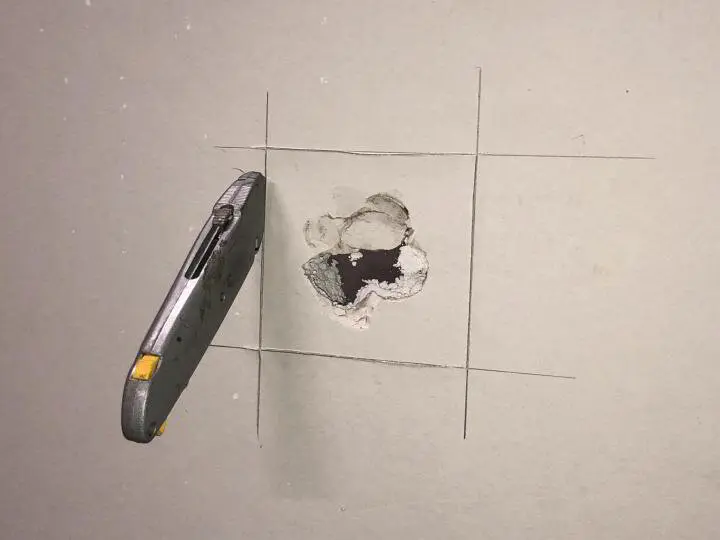
Often finished in a single short visit. Small holes need little compound, so they dry quickly and can be sanded and touched up the same day.
Doorknob holes and fist-size damage
Usually a one to two day job. A patch goes in, then two or three coats of compound, with drying time in between. Fast-setting compound can shorten this.
Large holes and cut-outs after trade work
When a plumber or electrician has opened a section of wall or ceiling, expect two to three days from patch to paint-ready. The opening needs backing, a new piece of drywall, taping on every edge and several coats. Our page on repairs after a plumber explains how these are typically handled.
Water-damaged walls and ceilings
This depends heavily on drying. The damaged area must be removed and the cavity must be dry before new board goes up. Once that is done, the repair itself usually runs two to four days including texture and primer. If the source was a long-term leak, add time for drying and any mould remediation.
Cracks and seam repairs
A single crack may take one or two days. Re-taping a long seam or several cracks across a ceiling takes longer because each strip of tape needs its own coats.
What slows repairs down in Florida
Humidity is the big one. Joint compound dries by evaporation, and air that is already saturated slows that down. A repair that dries overnight in a dry climate can take noticeably longer in a muggy Tampa Bay summer.
Other factors that stretch the timeline:
- No air conditioning running in the room, or windows left open on a humid day
- Thick coats of compound, which can crack or shrink if rushed
- Texture matching, which needs its own drying time before primer
- Plaster walls in older homes, which require different materials and patience
- Popcorn ceilings that need an asbestos test before work begins, if the home was built before the mid-1980s
How professionals speed things up
Experienced technicians use a few tricks to tighten the schedule without cutting corners:
- Setting-type compound, which hardens by chemical reaction rather than drying, so the next coat can go on sooner
- Running the home's AC and, where appropriate, fans to keep air moving
- Planning visits so drying happens overnight rather than while you wait
- Working on several areas at once, so each coat is applied to every repair in one trip
DIY versus professional timelines
A homeowner can absolutely fix a nail hole in an afternoon. Larger repairs tend to take DIYers longer because of re-sanding, re-coating and fixing ridges that show through paint. A technician who does this every day typically needs fewer coats to get a flat result.
If you are deciding whether to tackle a hole yourself, our step-by-step guide to fixing drywall holes walks through the process.
How long until I can paint?
Primer can go on once the final coat is completely dry and sanded. Paint follows once the primer is dry. If paint goes on too soon, the patch may show as a dull or shiny spot.
Planning your repair
Before work starts, ask for a written schedule that shows how many visits are expected and when the room will be usable. Our page on what to expect explains how The Patch Guyz runs a job from estimate to final walkthrough, and our drywall repair service covers the types of damage we fix. You can also text a photo to 727-242-8500 for a written estimate, usually within the hour, which will include the expected timeline for your repair.