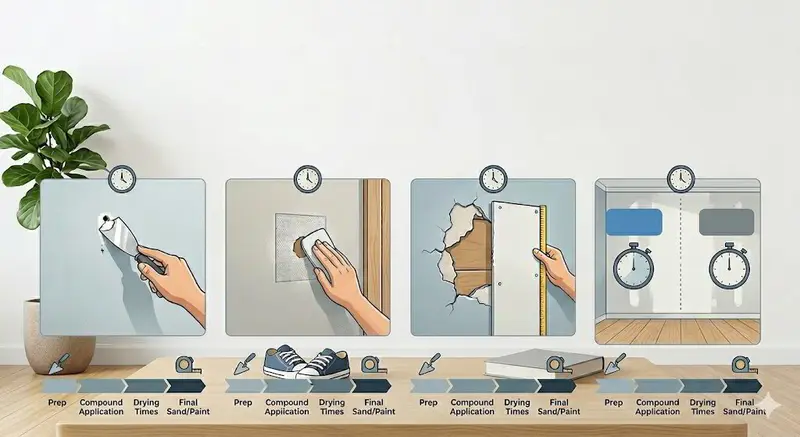
Homeowners often ask which repair method is "best." The honest answer is that every technique is the best one for some kind of damage and the wrong one for another. A mesh patch is perfect over a doorknob hole and useless over a soggy ceiling. A skim coat transforms a scarred wall but does nothing for a seam that keeps cracking because the framing moves.
This guide walks through the main techniques professionals use on walls and ceilings, what each one is for, and how Florida conditions change the choice.
Start With a Diagnosis, Not a Product
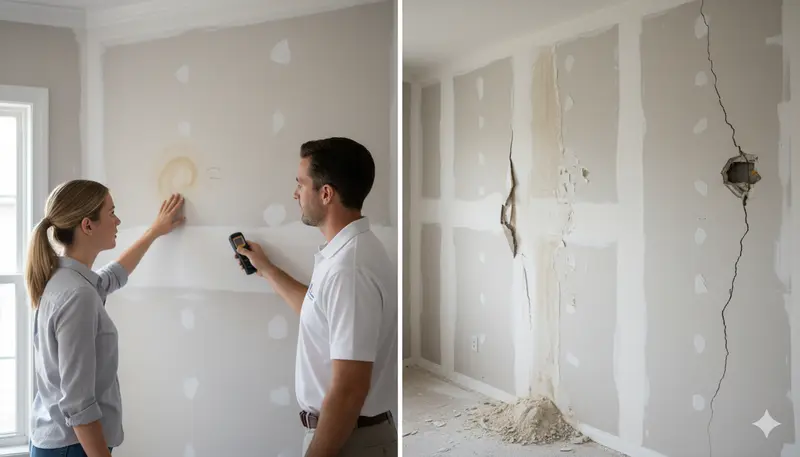
Before any compound comes out of the bucket, a good repair starts with three questions:
- What failed? Paper face, gypsum core, tape joint, fasteners, texture or paint.
- Why did it fail? Impact, moisture, movement, poor original finishing or another trade cutting an opening.
- What must the finish look like? A closet wall and a sunlit living room ceiling need very different levels of care.
Skipping this step is the most common reason repairs come back. A crack that is taped over without asking why it formed will usually reappear in the same spot.
Techniques for Walls
Spackle and spot fill
Nail holes, small dents and screw pops are filled with lightweight spackle or a thin coat of joint compound, sanded flush and spot-primed. It is quick, but the primer step matters: unprimed compound "flashes" through new paint as a dull patch.
Self-adhesive mesh and California patches
For openings up to roughly the size of a fist, a mesh patch or a "California patch" (a drywall piece with its paper face left as a flange) bridges the hole without needing framing behind it. Two or three feathered coats hide the edges.
Cut-and-replace
Larger holes, crushed corners and anything soft or crumbling get cut back to a clean rectangle. New drywall is screwed to studs or to wood backers, then taped and finished like a new seam. This is also the standard method when the gypsum has been wet, because wet gypsum loses strength even after it dries.
Re-taping seams
When joint tape blisters, peels or cracks, the loose tape is cut away, the joint is re-embedded with fresh tape, and the area is feathered wide so the repair does not show as a ridge.
Skim coating
A skim coat is a series of thin coats of compound over an entire wall. It is the fix for walls covered in patches, torn paper from removed wallpaper, or uneven finishing. It is not a fix for moisture or movement.
Techniques for Ceilings
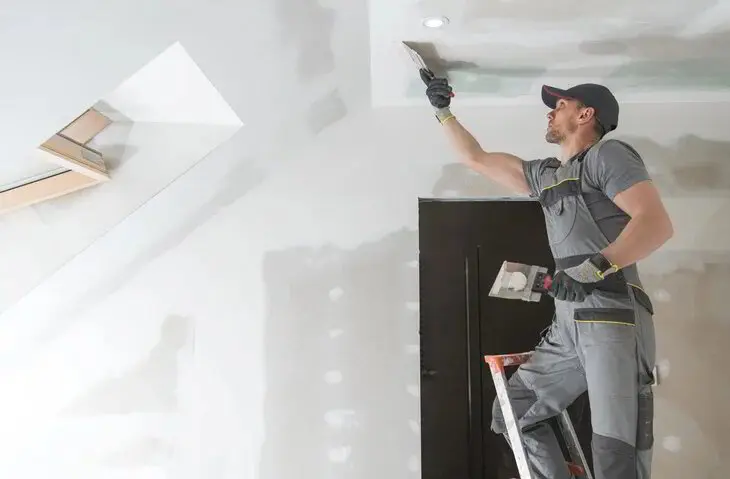
Ceilings are harder than walls because gravity works against you and light rakes across them from windows and fixtures.
Re-securing sagging drywall
A ceiling that sags between joists has usually lost its fasteners' grip, often from moisture or the weight of wet insulation. If the board is still sound, it can be pushed back up and re-fastened with screws and support. If it is stained through, soft or crumbling, it gets replaced.
Stain blocking
Water stains bleed through ordinary ceiling paint. Once the leak is fixed and the board is confirmed dry and solid, a stain-blocking primer seals the mark before finish paint.
Texture matching
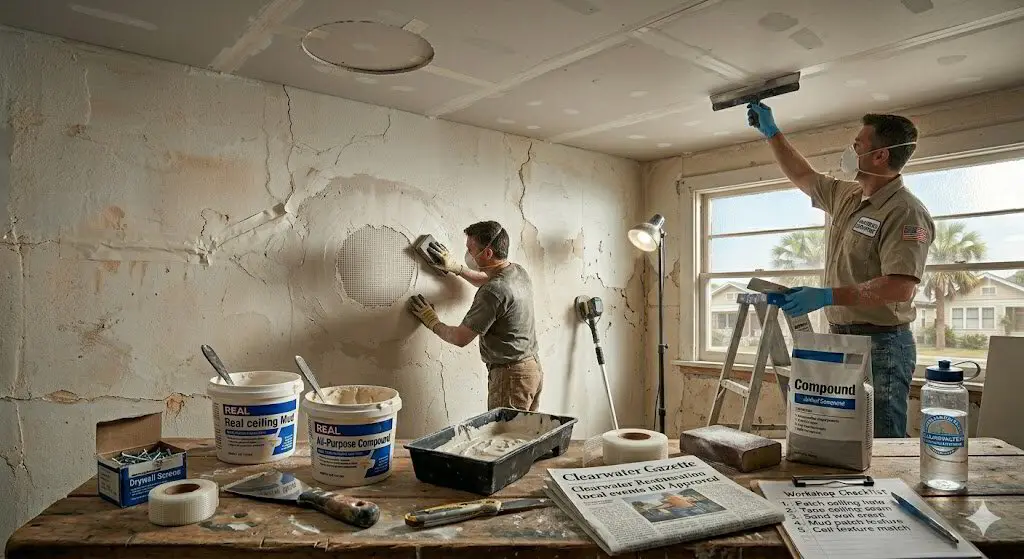
Many Florida ceilings carry knockdown, orange peel or popcorn texture. A smooth patch on a textured ceiling is obvious from across the room, so ceiling and wall texture matching is part of the repair, not an extra. Matching involves the right material, nozzle, pressure and timing for the knockdown.
Popcorn ceilings in older homes
In homes built before the mid-1980s, popcorn texture may contain asbestos. Have it tested before any scraping, sanding or patching. If the test is clear, removal or repair can proceed with normal dust control. If it is positive, the work belongs to an abatement specialist first.
Plaster Is a Different Material
Some older homes in the region have plaster walls rather than drywall. Plaster cracks and delaminates differently, and drywall compound alone often fails on it. Cracks need to be stabilized, loose areas re-attached, and the surface rebuilt with compatible materials. If your walls feel hard and cold and sound solid when tapped, read up on plaster wall repair before you buy supplies.
How Florida Changes the Choice
- Humidity slows drying. Ready-mixed compound can stay soft for a long time in a damp room. Setting-type compound, which cures chemically, is often the better first coat.
- Hurricane season and roof leaks mean ceiling repairs frequently follow water. Fix the source and confirm the area is dry before closing anything up.
- Block construction. Many homes have concrete block exterior walls with furring strips and drywall on the inside. Repairs on those walls need to account for the strips behind the board.
- AC condensate lines and air handlers in closets and attics are frequent sources of ceiling stains.
Matching Technique to Damage: Quick Reference
- Nail holes and dings: spot fill and prime.
- Doorknob holes: mesh or California patch.
- Large or crushed sections: cut-and-replace with backing.
- Peeling or bubbled tape: re-tape and feather.
- Many patches or torn paper: skim coat.
- Sagging ceiling, sound board: re-fasten and refinish.
- Stained or soft ceiling: fix leak, replace if needed, stain-block.
- Older popcorn: test first, then decide.
If you are not sure what you are looking at, our guide to identifying drywall damage covers the warning signs in more detail.
When to Call for Help
Small fills are reasonable DIY projects. Ceilings, texture matching, water-damaged sections and anything in a room with strong side light are where professional wall and ceiling repair usually pays for itself, because the second attempt costs more than doing it right once.
The Patch Guyz is a veteran-owned team based in Clearwater. Text a photo of the damage to 727-242-8500 and you will usually have a written quote within the hour, and that written quote is the final price.