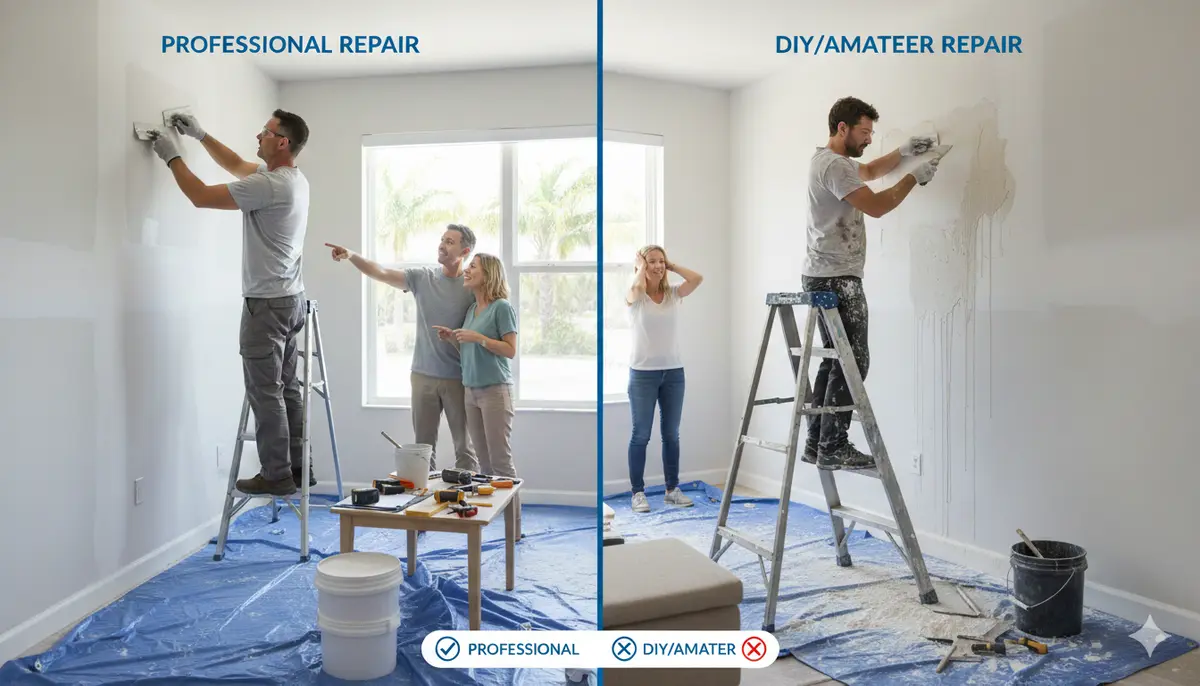
When people ask what it costs to repair drywall in Florida, they usually mean "what will someone charge me?" But there are really three ways to get a wall fixed — do it yourself, hire a general handyman, or call a drywall specialist — and each carries costs that don't show up on a price tag.
This guide compares the three routes honestly, so you can pick the option with the lowest total cost for your particular repair, not just the lowest upfront number.
What "cost" really includes
For any drywall repair, the total cost is made up of:
- Materials: compound, tape or patches, drywall board, primer, paint
- Tools: knives, sanding blocks, mud pan, saw, possibly a texture sprayer
- Time: yours or someone else's, including drying time between coats
- Protection and cleanup: plastic, tape, vacuuming dust out of the house
- Rework: what it costs if the first attempt shows through the paint
That last line is where most of the difference between the three options lives.
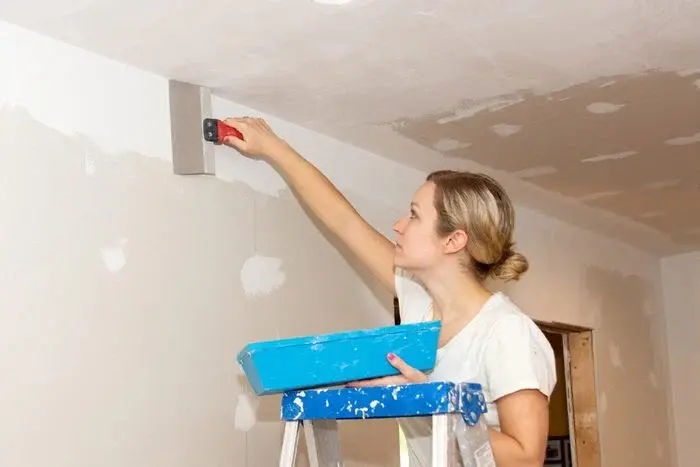
Option 1: Doing it yourself
Where DIY makes sense
- Nail holes and small anchor holes
- Minor dents and dings
- A single small hole on a smooth wall, using a self-adhesive mesh patch
- Touching up a nail pop
For these, DIY materials are inexpensive and most homeowners can get a decent result.
The hidden costs of DIY
- Tools add up. A basic set of knives, a pan, sanding supplies and a utility knife cost more than the compound itself, especially for a one-off job.
- Drying time in Florida. Humidity slows drying. A repair needing three coats can stretch over several days, during which the room is out of use.
- Texture. Matching orange peel or knockdown without practice is hard. Spray-can texture rarely matches an original sprayed finish.
- Dust. Sanding compound indoors spreads fine dust well beyond the room unless you seal it off.
- Rework. A patch that "flashes" through paint or shows a ridge in side light often has to be sanded back and redone.
If you'd like to try it, our guide to DIY drywall repair in Florida covers techniques that suit our climate.
Option 2: A general handyman
Where a handyman fits
A handyman is useful when drywall is one item on a longer list — hanging doors, fixing a fence, replacing a faucet. Bundling small patches with other tasks can be efficient.
Things to check
- Is drywall finishing a core skill or an occasional job?
- Will they match texture, or only patch smooth?
- Do they include primer and paint, or leave that to you?
- How will they control dust?
- Is the work covered by any written warranty?
Results vary widely. Some handymen are excellent finishers; others are generalists who fill and paint. A patch that's "done" but still visible means paying again later.
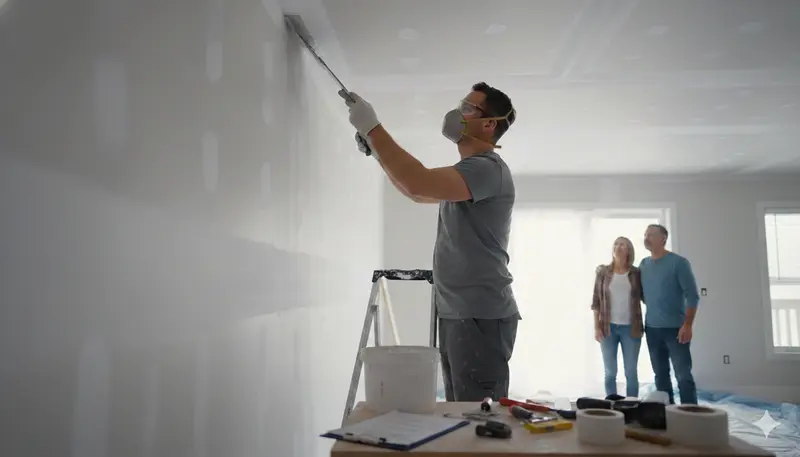
Option 3: A drywall repair specialist
What you pay for
A specialist's day is spent finishing walls and ceilings, so the practical differences are:
- Faster, flatter finishing with fewer coats
- Texture matching as part of the job
- Experience with water damage, ceilings, plaster and repairs after other trades
- Containment and dust control equipment
- A written warranty on workmanship
When a specialist saves money
- Ceiling repairs, especially after leaks
- Large holes or replaced sections
- Textured walls and ceilings
- Rooms with strong natural light that shows every flaw
- Water damage where moisture and possible mold need to be checked
- Any job where the result needs to be invisible, such as before a sale
A side-by-side summary
- Small nail holes, smooth wall: DIY is usually the best value.
- Several medium holes, textured walls: a specialist will usually cost less overall than DIY plus rework.
- Drywall as one of many household tasks: a skilled handyman can be a good fit.
- Ceiling stain with soft or sagging drywall: a specialist, after the leak is fixed.
- Pre-sale or rental turnover: a specialist for predictable, invisible results.
Florida factors that change the math
- Moisture. Water-damaged drywall that's patched without drying and checking behind it can harbour mold. Getting it right first time matters more here.
- Hurricane season. After storms, demand for repairs rises and schedules fill quickly. Small repairs done before the season are easier to book.
- Block walls. Many exterior walls are concrete block with furring strips behind the drywall. Repairs need fasteners and backing that suit that construction.
- Older homes. Popcorn ceilings in homes built before the mid-1980s should be tested for asbestos before they're patched, scraped or sanded.
How The Patch Guyz price repairs
We offer free virtual estimates: text a photo to 727-242-8500 and you'll usually get a written quote within the hour. That quote is the final price, with no hidden fees, and it states the repair, texture, primer and touch-up painting of the repaired area so you can compare it fairly with DIY or a handyman. Every job includes HEPA dust control, a walkthrough before payment and a one-year written workmanship warranty.
See our drywall repair services for the full range, our texture matching work for textured walls, or our Riverview drywall repair page if you're in southern Hillsborough County.