Most drywall tutorials are filmed somewhere dry and temperate. Follow the same steps in a Florida home in August and you may find your compound still soft the next morning, your patch shrinking into a dimple, or a hairline crack reappearing a few weeks later.
This guide is not a general how-to on patching holes. It is about what changes when you do DIY drywall repair in a humid climate, and how to adjust so your repairs last.
Humidity Is the Big Variable
Premixed joint compound dries by evaporation. When the air is already full of moisture, evaporation slows down. That causes three problems:
- Longer wait times. A coat that dries overnight in a dry climate can take much longer here.
- Shrinkage after sanding. If you sand and recoat before the compound is fully dry, it keeps shrinking and leaves a dip.
- Soft spots under paint. Paint over damp compound can blister or stay tacky.
How to manage it
- Run the AC. It is the best dehumidifier you own. Keep the room closed and cool while repairs dry.
- Add airflow. A fan pointed near, not directly at, the patch speeds drying evenly.
- Use setting-type compound for deep fills. Powdered "hot mud" hardens by chemical reaction rather than evaporation, so humidity matters much less. Use it for the first coat on deep holes and bedding tape, then switch to premixed topping compound for easier sanding.
- Check before sanding. Compound is dry when it is uniformly light in color with no darker damp patches, and feels hard rather than cool.
Pick Materials That Suit the Climate
- Mold-resistant board for patches in bathrooms, laundry rooms and kitchens.
- Paper tape set in compound is stronger than mesh for seams that move. Mesh with setting compound works well for flat patches.
- A quality primer is needed over every patch. In humid rooms, a mildew-resistant primer and paint add protection.
Know Your Walls
Florida homes often have walls you will not see in a typical tutorial.
- Drywall over concrete block. Exterior walls in many block homes have drywall attached to furring strips over the block. Holes may only be as deep as the strip, so screws and anchors need to be the right length.
- Plaster on block. Older homes may have plaster applied directly to the masonry. Drywall compound alone does not always bond well; a bonding agent helps.
- Popcorn ceilings in older homes. If your home was built before the mid-1980s, test the texture for asbestos before cutting, drilling or patching into it.
Repairs That Are Reasonable DIY
- Nail and screw pops: drive a new screw just above or below, then reset and fill the old one.
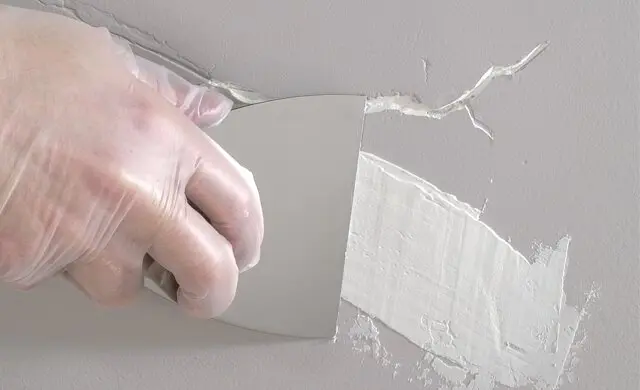
- Small holes and dents: fill with lightweight compound, sand and prime.
- Doorknob-sized holes: a self-adhesive patch or a California patch, then two or three thin coats.
- Hairline cracks in a corner: cut a small V, fill with setting compound, tape if needed, and finish.
For a full walk-through of crack repair, see our step-by-step guide to fixing drywall cracks at home.
When DIY Is the Wrong Call
Stop and get professional help if you see:
- Soft, sagging or stained drywall from a leak, especially on a ceiling
- Mold on the back of the board or a musty smell that does not go away
- Cracks that keep coming back or are getting wider, which suggests movement or moisture
- Large areas that need texture matched across a whole wall
- Electrical or plumbing inside the damaged area
The cost of redoing a failed DIY repair is often higher than doing it right once.
Finishing Tips for an Invisible Patch
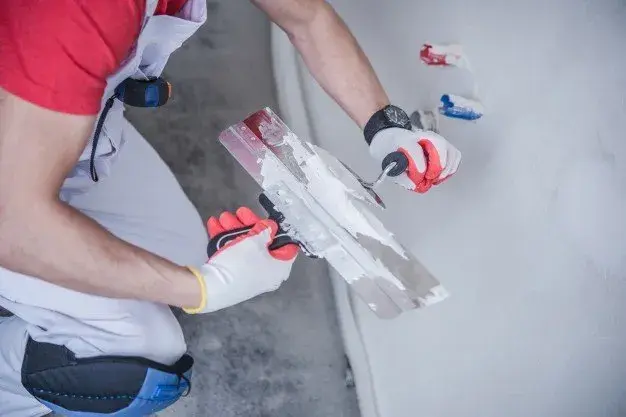
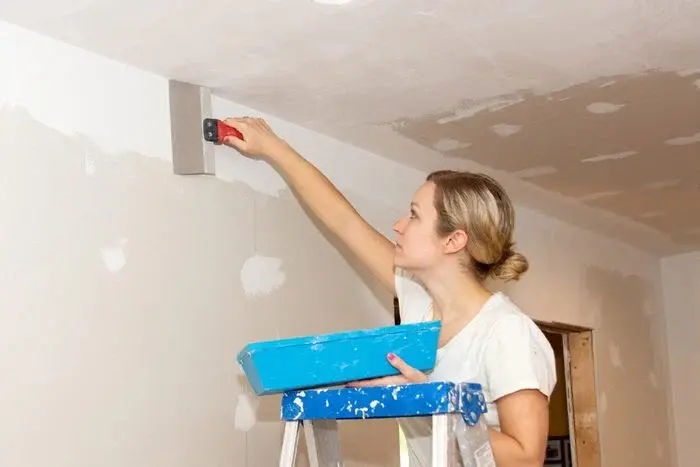
- Feather each coat wider than the last, several inches past the damage.
- Use thin coats. Thick coats crack and shrink, especially in humidity.
- Sand lightly between coats and wipe off dust with a damp sponge.
- Check the patch with a flashlight held flat to the wall.
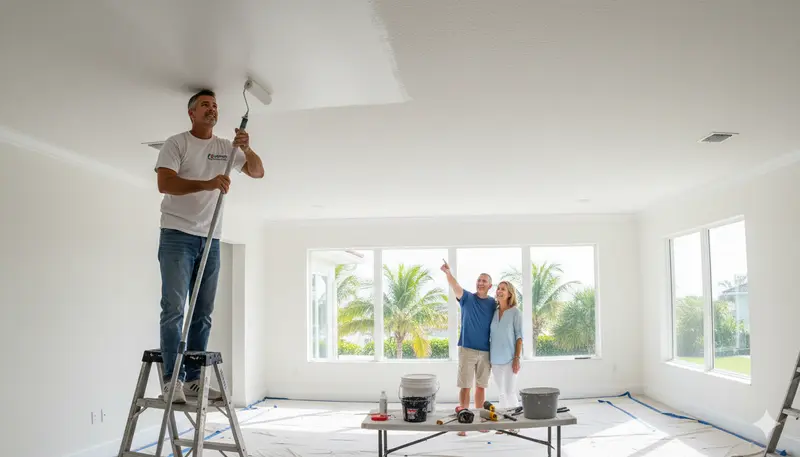
- Prime, then paint the full wall section from corner to corner so sheen and color blend.
Getting Help
If your repair turns into something bigger, The Patch Guyz cover six counties in West Central Florida. Text a photo to 727-242-8500 for a free virtual estimate, usually within the hour. Our drywall repair technicians handle everything from single holes to storm-damaged ceiling sections, and our seam and crack specialists fix the cracks that keep coming back.