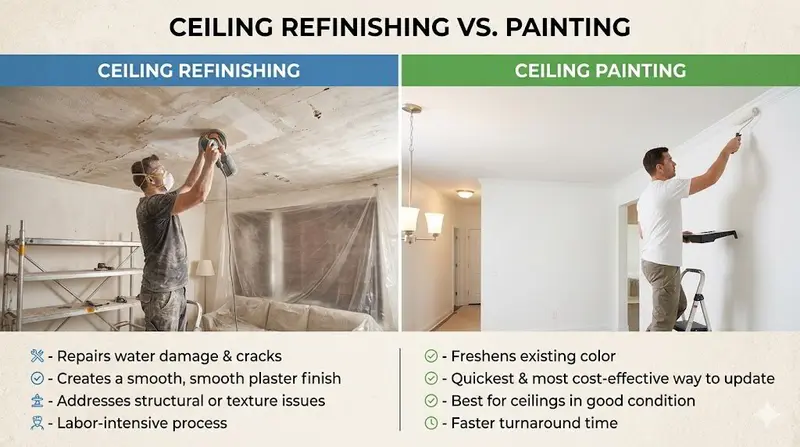

Ceiling refinishing covers a lot of different jobs: removing popcorn texture, skim coating to a smooth finish, applying a new knockdown or orange peel texture, repairing water-damaged sections, and repainting. All of them happen over your head, over your furniture, and usually inside a home you are still living in.
That makes the choice of contractor more important than it looks. Here is what to ask, and what the answers should sound like.
First, Know What You Want Done
Contractors give better answers when you can describe the goal. Decide which of these you are after:
- Smooth ceiling from a textured one, which usually means removal plus skim coating
- New texture over an existing ceiling
- Repair and match a damaged section so it blends with the rest
- Refresh with stain blocking and paint only
If you are unsure whether a repaint is enough, our comparison of ceiling refinishing vs. painting will help you decide before you call.
Questions About Safety and Testing
"Does this ceiling need an asbestos test?"
In Florida homes built before the mid-1980s, popcorn and some other textures may contain asbestos. A careful contractor will raise this before you do and will not scrape, sand or patch an untested older ceiling. If someone shrugs it off, keep looking.
"How do you control dust?"
Ceiling work is the dustiest job in drywall. Ask what is sealed off, whether vents and returns are covered, and whether sanding uses HEPA-filtered vacuums. Listen for specifics such as HEPA-filtered sanding and sealed returns rather than "we clean up after."
"Who will be in my home?"
Ask whether the crew is the company's own technicians or subcontractors, and whether they are background-checked. You are entitled to know who is working above your kitchen.
Questions About the Work Itself
"How will you match or create the texture?"
Texture is where ceiling jobs succeed or fail. Ask how they will match an existing pattern and whether you can see a sample or test area first. For more on what good matching involves, see our page on ceiling texture matching.
"What happens to my furniture and floors?"
The best answer includes moving or covering furniture, protecting floors with drop cloths or film, masking walls at the ceiling line, and covering light fixtures and fans.
"What finish should I expect?"
A smooth ceiling in a room with big windows needs a higher level of finishing than a textured hallway ceiling. Ask how many coats they apply and how they check for flaws before priming.
"Do you prime with a stain blocker?"
Ceilings in Florida often carry old water stains from AC leaks or roof leaks. Regular paint does not cover them. A stain-blocking primer should be part of the plan wherever staining exists.
"How long will the room be out of use?"
Get a realistic answer that includes drying time. Humidity slows compound drying, and a contractor who promises unrealistic speed may be skipping steps.
Questions About the Quote
A solid written quote should list:
- The rooms and ceiling areas covered
- Removal, repair or texture work, described clearly
- Prep and protection
- Priming and painting, and whether paint is included
- Clean-up and debris removal
- Warranty terms in writing
Ask whether the written quote is the final price, or whether extras can appear once work starts. Some companies quote low and add charges for "unforeseen" texture or prep. A clear quote should account for the conditions the contractor can already see.
Red Flags
- No mention of asbestos testing on an older popcorn ceiling
- A price given without photos or a visit
- No written warranty, or a warranty that only exists verbally
- Pressure to decide immediately
- Vague answers about dust and furniture protection
- Payment demanded in full before work starts
- No walkthrough at the end
How The Patch Guyz Answers These Questions
We are a veteran-owned team based in Clearwater, working across Hillsborough, Pinellas, Polk, Manatee, Pasco and Sarasota counties. On ceilings, that means:
- Free virtual estimates from photos texted to 727-242-8500, usually answered within the hour
- Testing raised up front on older popcorn ceilings
- HEPA dust control on every job
- Background-checked technicians
- A written quote that is the final price
- Primer and touch-up paint on repaired areas; we don't repaint whole ceilings or rooms, so the final full coat goes to your painter
- A walkthrough with you before payment, and a 1-year written workmanship warranty
If your project is mostly about getting rid of texture, our popcorn ceiling removal page explains that process step by step, and what to expect on the day covers scheduling and clean-up.
The Short Version
Pick the contractor who asks you questions back, talks about testing and dust before price, puts everything in writing, and shows you the result before asking for payment. Those habits matter more on a ceiling than almost anywhere else in the house.