
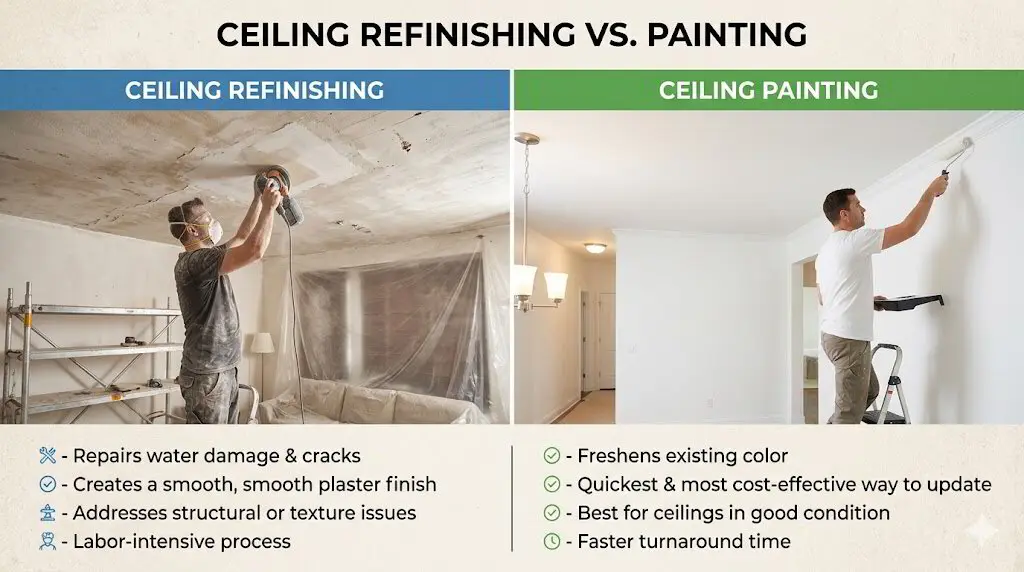
Look up. If your ceiling is just a little dingy, a fresh coat of paint will do the job. If it has cracks along the seams, patches that show, a yellowed stain from an old leak, or a texture you've never liked, paint alone will only put a new colour on the same problems.
That's the core of the ceiling refinishing vs. painting decision. One changes colour; the other changes the surface. This guide explains both, then gives you a simple way to choose.
What ceiling painting involves
Painting a ceiling is a surface treatment. A good job still takes care:
- Cleaning dust, cobwebs and kitchen grease
- Filling small nail holes and dings
- Spot-priming stains with a stain-blocking primer
- Cutting in edges, then rolling one or two coats of flat ceiling paint
Painting is the right call when the ceiling is structurally sound, the texture is fine, and the issue is colour, dirt or minor marks.
What ceiling refinishing involves
Refinishing goes beneath the paint. Depending on the ceiling, it can include:
- Repairing cracked or bubbled tape at seams
- Replacing water-damaged or sagging sections of drywall
- Removing an unwanted texture, such as popcorn
- Skim coating — applying thin coats of joint compound over the whole ceiling to create a new, uniform surface
- Applying a fresh texture (smooth, orange peel or knockdown)
- Priming and painting the new surface
In short, refinishing rebuilds the finish layer. Painting is the last step of a refinish, not a substitute for it.
Problems paint cannot fix
These are the signs that a ceiling needs more than a roller:
- Cracks that reopen. Seam cracks keep returning because the tape underneath has failed.
- Visible patches. Old repairs that were never textured to match will still show under new paint.
- Sagging. Drywall that dips between joists — often after a leak or from undersized board — needs to be re-fastened or replaced.
- Peeling paint in sheets. Usually a sign of moisture or of paint over an unprimed or dusty surface.
- Recurring stains. If a stain bleeds through, the leak may be active or the surface needs proper sealing.
- Texture damage. Scraped or water-damaged popcorn or knockdown needs repair and blending.
Florida factors to consider
Ceilings in Tampa Bay homes take more abuse than walls. Hot attics, humid air, AC ducts and air handlers in the attic, and roofs that face summer storms and hurricane season all put ceilings first in line for moisture problems.
That leads to two practical points:
- Fix moisture first. If a stain came from a roof leak or a clogged AC condensate line, have that repaired and the ceiling dried before any refinishing begins.
- Test popcorn before disturbing it. In homes built before the mid-1980s, popcorn ceiling texture may contain asbestos. Test before scraping, sanding or even skim coating over damaged sections.
Comparing the two side by side
Time and disruption
Painting a ceiling is usually quick and creates little dust. Refinishing takes longer because joint compound needs drying time between coats — longer in humid weather — and it involves sanding, so dust control matters. Professional crews use plastic containment and HEPA dust control to keep the rest of the home clean.
Durability
A paint job on a sound ceiling lasts for years. Paint on a failing ceiling can look worse within months as cracks reappear. Refinishing fixes the cause, so the new paint lasts as long as it would on a new ceiling.
Value and appearance
Smooth or lightly textured ceilings tend to make rooms look brighter and more current, especially in homes with large windows where side light exaggerates every imperfection. Refinishing is often worth it before a sale or a major renovation; painting is fine for routine upkeep.
A simple decision guide
Choose painting if:
- The ceiling is flat, without sags or recurring cracks
- You're happy with the existing texture
- Any stains are old, dry and sealable
Choose refinishing if:
- You see seam cracks, nail pops or visible old patches
- A section has sagged or been water damaged
- You want to remove popcorn or change the texture
- You're renovating and want the ceiling to match new work
If you're unsure, a photo of the ceiling taken with a light held at an angle will show surface flaws clearly, and that's usually enough for a contractor to tell you which path fits.
Getting it done
The Patch Guyz handle the repair and refinishing side of this decision; for a straight repaint of a sound ceiling, a painter is the right call. Our wall and ceiling repair service covers seam cracks, sagging sections and leak damage, our page on ceiling crack repair explains the fix for seams that keep reopening, our texture specialists match or replace ceiling finishes, and our popcorn ceiling removal service starts with testing guidance before any scraping. For more on the upside of a full refinish, read the benefits of ceiling refinishing.