Run your hand across almost any wall in a Tampa Bay home and you'll feel it: a slight bumpiness, a pattern of flattened splotches, or a soft swirl. Textured walls and ceilings are the norm here, partly because they hide minor imperfections and partly because builders have used them for decades.
Knowing exactly which texture you have matters when you patch a hole, add a room or decide whether to modernise. This guide covers the common types, how to tell them apart, and how to choose.
The textures you'll find in Tampa homes
Orange peel
A fine, even bumpiness that looks like the skin of an orange. It's sprayed on as thinned compound and left to dry. Orange peel is subtle, easy to clean and very common on walls in newer subdivisions.
- Look: small, uniform bumps
- Feel: slightly rough, like fine sandpaper
- Best for: walls in most rooms; it hides minor flaws without being obvious
Knockdown
Compound is sprayed in larger splatters, allowed to set briefly, then flattened ("knocked down") with a wide trowel. The result is a pattern of flat, irregular islands with low areas between.
- Look: flattened blotches, a bit like stucco or stone
- Feel: smooth tops with recessed gaps
- Best for: ceilings and walls where you want more visual interest and better flaw-hiding
Skip trowel
Compound is applied by hand with a trowel that "skips" across the surface, leaving random patches with a hand-crafted, Mediterranean look. It's labour-intensive and less common in tract homes but popular in custom and Spanish-style homes.
Popcorn (acoustic)
A thick, bumpy spray texture once common on ceilings. In homes built before the mid-1980s, popcorn texture may contain asbestos, so it should be tested before it's scraped, sanded or patched. It's largely out of fashion and many homeowners choose to remove it.
Smooth (Level 5)
No texture at all. Smooth walls look clean and modern, but they require a high level of finishing because every seam and dip shows, especially under bright Florida sunlight.
How to identify your texture
- Shine a flashlight across the wall at a low angle. The shadows reveal the pattern clearly.
- Look at the tops of the bumps. Rounded tops mean orange peel; flattened tops mean knockdown.
- Check spacing. Uniform, fine dots suggest orange peel; larger, irregular islands suggest knockdown; sweeping hand-applied arcs suggest skip trowel.
- Take a close-up photo with a coin for scale. It's useful when getting repair quotes.
Choosing a texture for a new room or renovation
Consider:
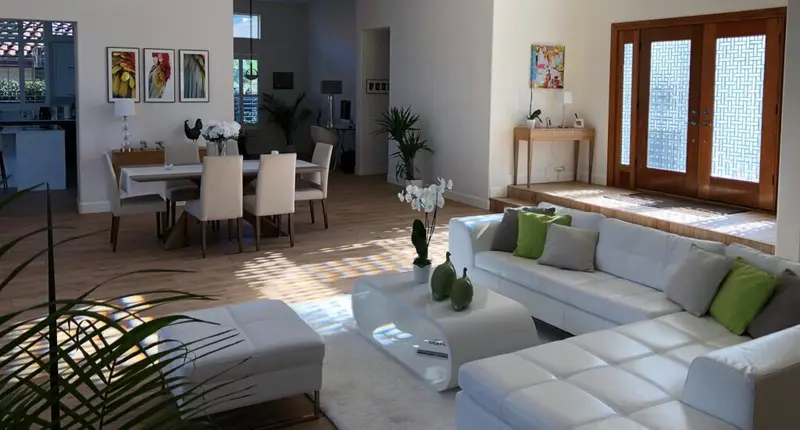
- Light. Rooms with large windows and low-angle sun are unforgiving. Texture hides imperfections that a smooth wall would show.
- Style. Smooth or light orange peel suits modern interiors. Knockdown and skip trowel suit traditional and Mediterranean styles.
- Cleaning. Fine textures clean more easily than heavy knockdown in busy areas like kitchens and kids' rooms.
- Matching. In an addition or partial remodel, match what's already in the house so new rooms don't look patched on.
Changing or removing texture
You don't have to live with a texture you dislike.
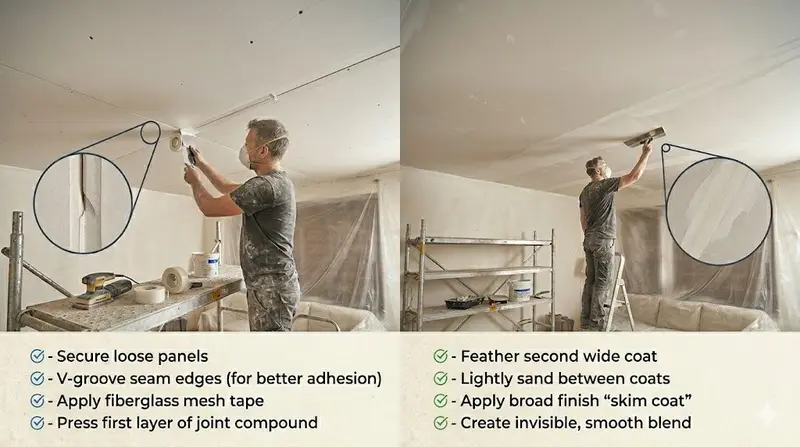
- Skim coating: thin coats of compound fill the texture to create a smooth surface. This works well on orange peel and knockdown.
- Re-texturing: a lighter texture can be applied over a heavier one once it's been skimmed.
- Popcorn removal: after testing for asbestos, popcorn can be scraped, the ceiling repaired and refinished smooth or with a lighter texture.
All of these generate dust, so containment matters.
Why texture matching is a skill
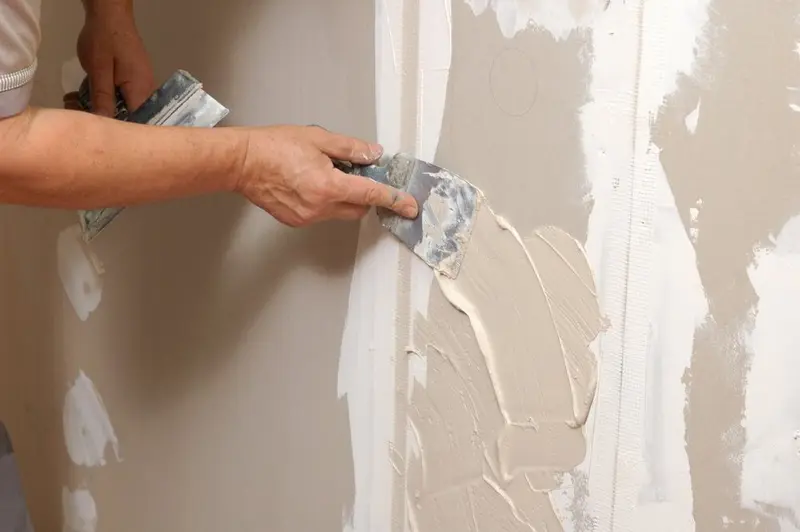
The most common complaint about drywall repairs is a patch that's flat in the middle of a textured wall. Matching texture depends on compound consistency, spray pressure, nozzle size, distance and timing — especially the moment you knock down a knockdown texture. Getting it right usually takes a few test passes on scrap board before touching the wall.
Spray-can textures can work on very small orange-peel patches but rarely match a professionally sprayed knockdown.
Caring for textured walls
- Dust with a soft brush or vacuum attachment
- Wash with a sponge and mild soapy water, dabbing rather than scrubbing
- Repaint with a thicker-nap roller so paint reaches the low spots
- Fix small dings promptly and re-texture to match
Need a texture matched?
For patches and new sections that need to blend in, our textured wall and ceiling specialists match orange peel, knockdown, skip trowel and smooth finishes. If you're ready to get rid of a dated ceiling, see our popcorn ceiling removal service, or our textured ceiling removal in Bradenton if you're in Manatee County. For patching techniques, read our interior drywall repair tips.