Most ceiling problems can be repaired. But after a major roof leak, a long-term AC overflow, a renovation that moves walls, or when an old textured ceiling is too damaged to save, a new ceiling is often the cleaner answer.
Installing a drywall ceiling is one of the more demanding jobs in residential drywall. Heavy sheets go overhead, the attic above in a Tampa home is hot and humid, and every flaw shows once light rakes across the finished surface. Here's what the work involves and what to plan for.
When a ceiling needs replacing, not patching
A full or large-section replacement usually makes sense when:
- Drywall has been soaked and has sagged across several joist bays
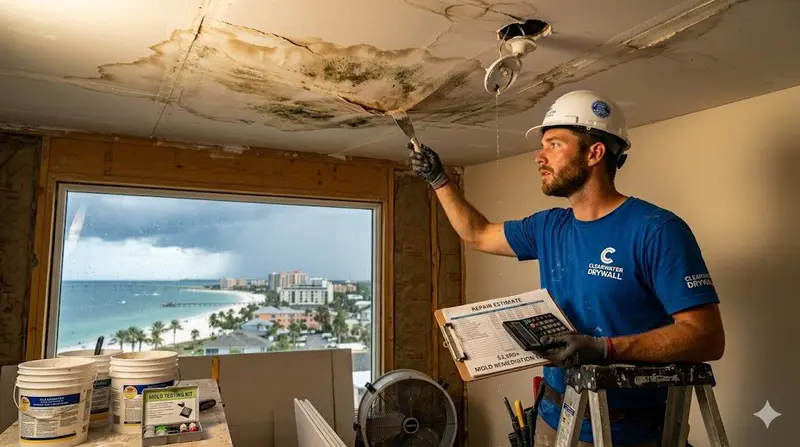
- Mold has grown on the back of the board or on insulation
- The ceiling has been patched so many times it can't be finished flat
- A renovation removes or moves walls, leaving large gaps
- Popcorn or heavy texture is damaged and replacement is more practical than removal (after asbestos testing in homes built before the mid-1980s)
If damage is limited to one or two areas, a repair is usually quicker. Our article on drywall replacement in the Tampa Bay area covers how to tell the difference.
Option: remove or cover?
There are two ways to get a new ceiling surface.
Tear out and replace
The old ceiling comes down, the framing and insulation are inspected, and new drywall goes up. This is the right approach after water damage or mold, because it lets everything be dried, inspected and replaced as needed.
Install new drywall over the existing ceiling
On a sound, dry ceiling, thin drywall can sometimes be screwed through the old surface into the joists. It avoids demolition dust, but adds weight, requires longer fasteners and adjustments at light fixtures and vents, and isn't suitable if there's moisture, mold or sagging.
Choosing the board
- Sag-resistant ceiling board is designed to span joists without drooping, and is the usual choice for ceilings, especially where heavy texture or blown insulation sits above.
- Moisture- and mold-resistant board is a good fit for bathroom ceilings.
- Fire-rated board is commonly required on garage ceilings beneath living space. Check local code.
Board thickness and type should suit the joist or truss spacing. Your installer should confirm this before ordering materials.
The installation process
1. Protect and prepare
Rooms are emptied or furniture covered, floors protected, and the space sealed with plastic. Light fixtures, fans, smoke detectors and vents are removed by the appropriate trade.
2. Demolition (if needed)
Old drywall and wet insulation are removed and bagged. Framing is checked for water damage, rot or termite activity, and any problems are addressed.
3. Attic-side checks
Before closing up, it's the moment to deal with what's above: fix roof or AC leaks, secure loose wiring and ducts, and replace insulation.
4. Hanging
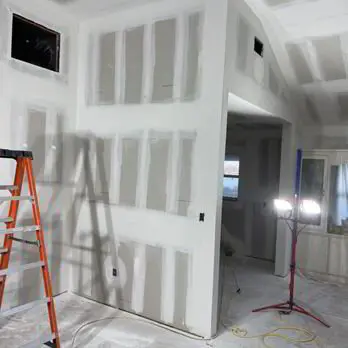
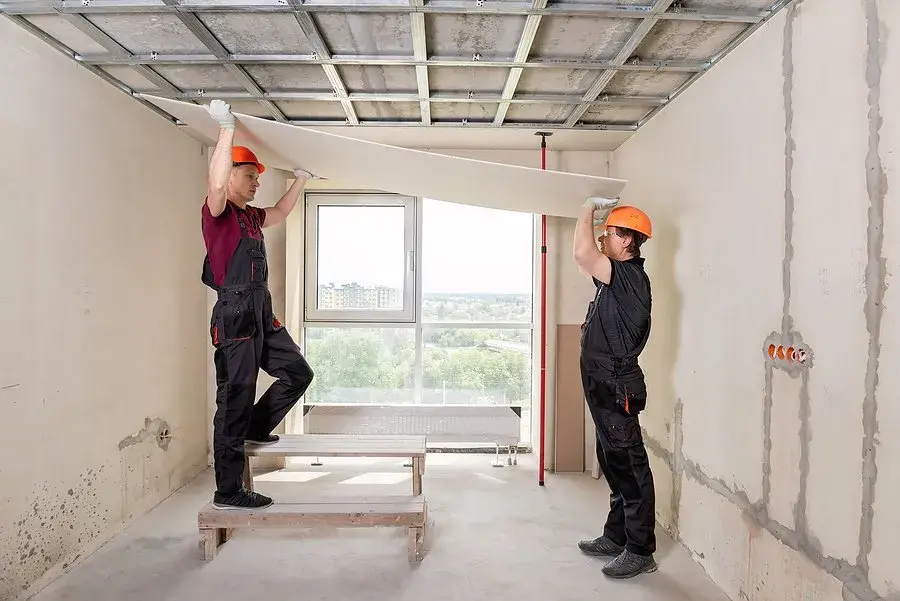
Sheets are usually installed perpendicular to joists, with ends staggered and fastened with screws at proper spacing. Drywall lifts or extra hands keep sheets tight to the framing; a sheet forced into place can crack or pop fasteners later.
5. Taping and finishing
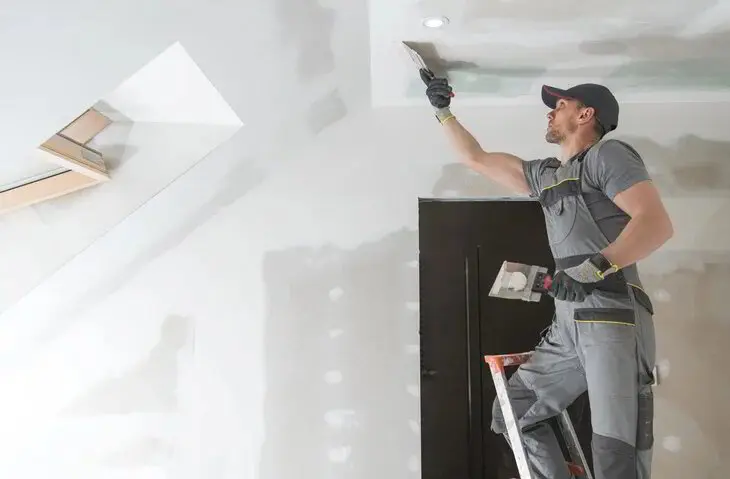
Seams are taped, fasteners covered, and multiple coats of compound applied and sanded. Ceilings take longer than walls because work is overhead and Tampa's humidity slows drying between coats.
6. Texture or smooth finish
The ceiling is either finished smooth or textured — orange peel and knockdown are common choices that hide minor imperfections better than a smooth finish.
7. Prime and paint
Primer seals the new surface, then flat ceiling paint goes on. Fixtures are reinstalled.
Lighting and fixtures
A new ceiling is a good opportunity to change lighting. Recessed lights, new fan locations or moved fixtures should be planned with an electrician before drywall goes up, so wiring is in place and cut-outs are accurate.
How long does it take?
A single room ceiling can take several days, because finishing coats must dry between steps. Larger areas, high ceilings and texture add time. Keeping the AC running helps compound cure.
Questions to ask your installer
- Will you inspect framing and insulation once the old ceiling is down?
- What board will you use and why?
- How will you match or replace the texture?
- How is dust controlled?
- Is primer and paint included?
- Is the quote the final price?
Ceiling work from The Patch Guyz
To be upfront: The Patch Guyz don't install whole new ceilings. Tearing out and re-hanging an entire ceiling, or ceiling work tied to a remodel, is a job for a drywall installer or general contractor. What we do across the Tampa area is repair ceilings and replace the damaged parts. Our wall and ceiling repair team takes on leak-damaged and sagging spots, our damaged drywall replacement service cuts out and replaces soaked or broken sections, and our page on ceiling water stain repair covers the most common starting point. Homeowners near USF and the Hillsborough River can see our Temple Terrace page. HEPA dust control is standard on every job, and our work carries a one-year written workmanship warranty.