Drywall is designed to be repaired. Holes can be patched, cracks re-taped, dents filled. But there's a point where patching becomes a false economy — where the board itself has failed and covering it only hides a problem that will return.
For Tampa Bay homes, that point usually involves water. This guide explains the signs that drywall needs replacing rather than patching, how much should come out, and what the replacement process looks like.
Patch or replace: the quick test
Ask three questions about the damaged area:
- Is the drywall firm? Press it with your hand. Firm board can usually be repaired. Soft, spongy or crumbling board has lost its strength.
- Is it dry and clean behind the surface? Staining or a musty smell suggests moisture or mold in the cavity.
- Is the damage contained? A hole or crack in otherwise sound board is a patch. Damage spread across a large area, or several failed repairs side by side, points toward replacement.
If the answer to all three is "yes," patch it. If any is "no," replacement is likely.
Situations that call for replacement
Water-soaked drywall
Gypsum softens when wet, and the paper facing can delaminate and feed mold. Board that has been soaked by a roof leak, a burst supply line, an overflowing AC pan or wind-driven storm rain usually needs to come out, especially if it sagged, crumbled or stayed wet for more than a short time.
Mold
Visible mold on drywall, or mold found on the back of the board once a section is opened, means the affected material should be removed rather than painted over. Larger mold problems should be assessed by a mold professional.
Flood water
Water that came from outside — storm surge or rising floodwater — is contaminated. Drywall it touched should be removed and replaced, typically cut well above the water line, after the structure has dried.
Crumbling or damaged edges
Board that has been repeatedly patched, has large dents along its edges, or is broken around outlets and fixtures may be quicker to replace than to rebuild.
Renovation and access
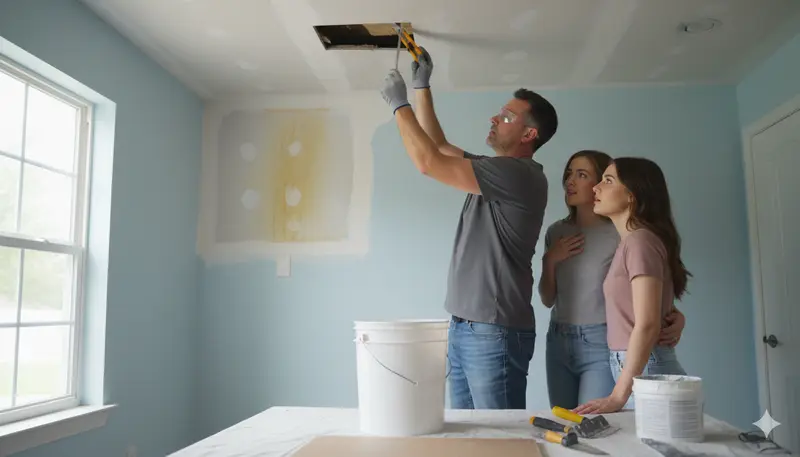
When plumbing, electrical or HVAC work has opened large sections of wall or ceiling, replacing whole pieces gives a flatter result than many small patches.
How much drywall to remove
The goal is to cut back to sound, dry board and to a sensible edge for the new piece. Common practice includes:
- Cutting out beyond the visible stain, since water travels further than it shows
- Cutting to the centre of studs or joists, so new board has framing to fasten to
- For flood damage, cutting to a uniform height above the water line around the room
- Removing wet insulation behind the board
A moisture meter helps find the true edge of the damage.
What replacement involves
- Stop the water source and confirm the repair
- Protect the room and set up dust control
- Remove damaged drywall and insulation
- Dry the cavity thoroughly with fans, dehumidifiers and the AC — in Florida's humidity this step needs patience
- Inspect framing for rot, mold or termite damage and address it
- Replace insulation where needed
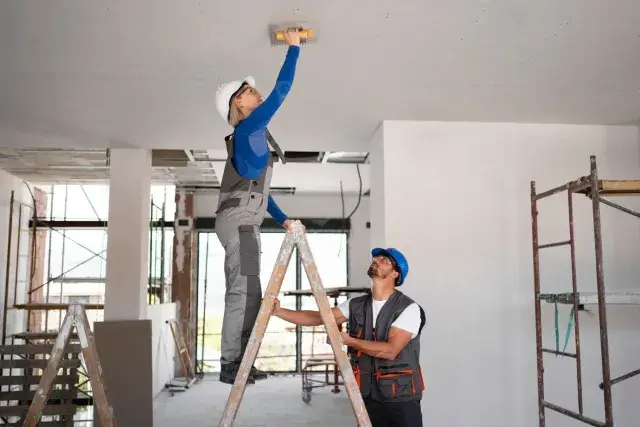
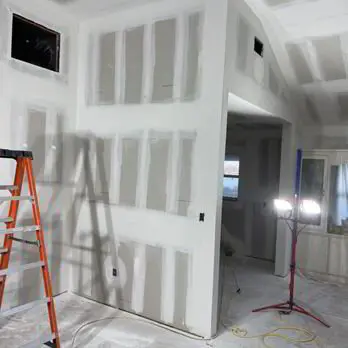
- Hang new drywall of matching thickness, using moisture-resistant board in bathrooms and other damp areas
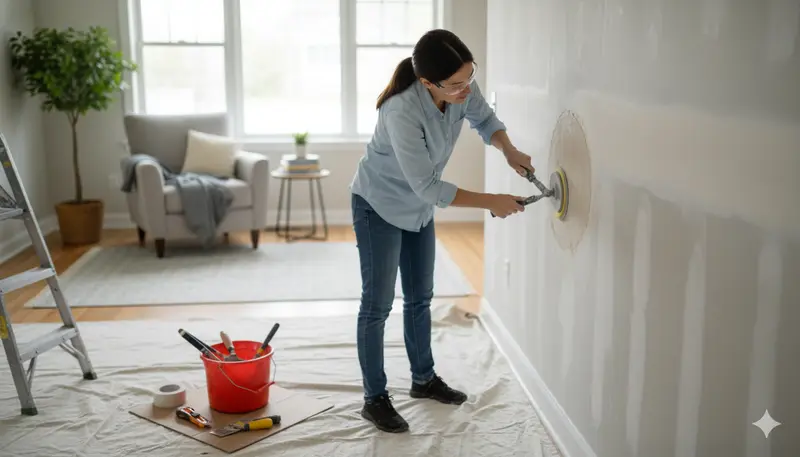
- Tape, finish and match the existing texture
- Prime and paint
Closing up a wall before it's dry is the most common replacement mistake. It traps moisture and invites mold behind brand-new drywall.
Block walls and Florida construction
Many exterior walls in Tampa Bay homes are concrete block with drywall fastened to furring strips. Water entering through block or stucco can soak those strips and the bottom of the board. Replacement in these areas may include new furring strips, and the exterior entry point should be sealed so the problem doesn't return.
Insurance and documentation
Before anything is removed after a sudden leak or storm:
- Photograph the damage, including the source
- Keep removed materials until the adjuster has seen them, if your insurer asks
- Keep receipts for the plumbing or roof repair as well as the drywall work
For step-by-step guidance focused purely on water, read our guide on how to repair water-damaged drywall.
Replacement with The Patch Guyz
We replace damaged sections of drywall, from a cut-out below a leaking pipe to a storm-soaked stretch of ceiling. If a whole ceiling or room has to come down, that is a job for a drywall installer or general contractor, and we will tell you so. Our repairs after plumbing work service is built for walls and ceilings opened for leaks, and our general drywall repair team handles everything from cut-outs to full texture matching. North Pinellas homeowners can also visit our Dunedin drywall page. Text a photo to 727-242-8500 for a free written estimate.