Whether you're finishing a garage, enclosing a lanai, opening up a kitchen or rebuilding after water damage, new drywall is usually one of the bigger line items in a renovation. It's also one of the hardest to compare, because two contractors can quote the same room very differently.
Rather than publishing price figures that won't match your project, this guide explains the factors that actually determine drywall installation cost, so you can read a quote, budget sensibly and ask the right questions.
Hanging versus finishing
A drywall installation has two distinct phases, and they're often priced separately:
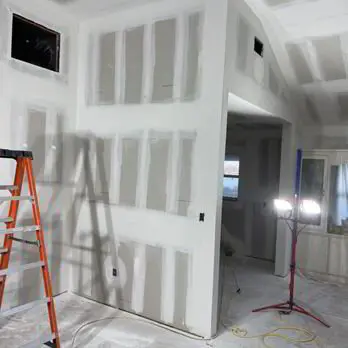
- Hanging: measuring, cutting and screwing sheets to the framing, including cut-outs for outlets, switches, vents and windows.
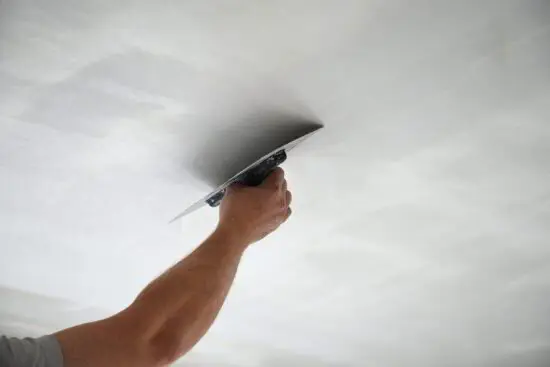
- Finishing: taping seams, covering screws, installing corner bead, applying several coats of compound, sanding, and texturing if required.
Finishing usually takes longer than hanging. Each coat must dry before the next, sanding takes care, and the result determines whether walls look flat under paint. When comparing quotes, check that both phases are included.
Board type
Different rooms call for different drywall, and the choice affects material cost:
- Standard half-inch board: the default for most interior walls.
- Sag-resistant ceiling board: lighter, stiffer board designed to span ceiling joists without drooping, useful under Florida's hot, humid attics.
- Moisture- and mold-resistant board: recommended for bathrooms, laundry rooms and areas with higher humidity. Note that it resists moisture; it isn't waterproof.
- Cement board: used behind tile in showers and tub surrounds instead of drywall.
- Fire-rated (Type X) board: commonly required on walls and ceilings between an attached garage and living space. Check local code requirements.
- Sound-dampening board: for media rooms or shared walls.
Level of finish
The industry describes finish quality in levels, from Level 0 (hung, not taped) to Level 5 (a full skim coat over the entire surface). Most homes are finished to Level 4, which suits textured walls and flat paint. Smooth walls in rooms with strong natural light, or walls getting glossy paint, may need Level 5.
Each step up adds labour, so specifying the right level for each room — rather than the highest everywhere — keeps costs reasonable.
Texture
If your home has orange peel or knockdown texture, new drywall has to be textured to match. Matching an existing texture in an addition or a partial remodel takes more skill than texturing a whole new house.
Ceilings and height
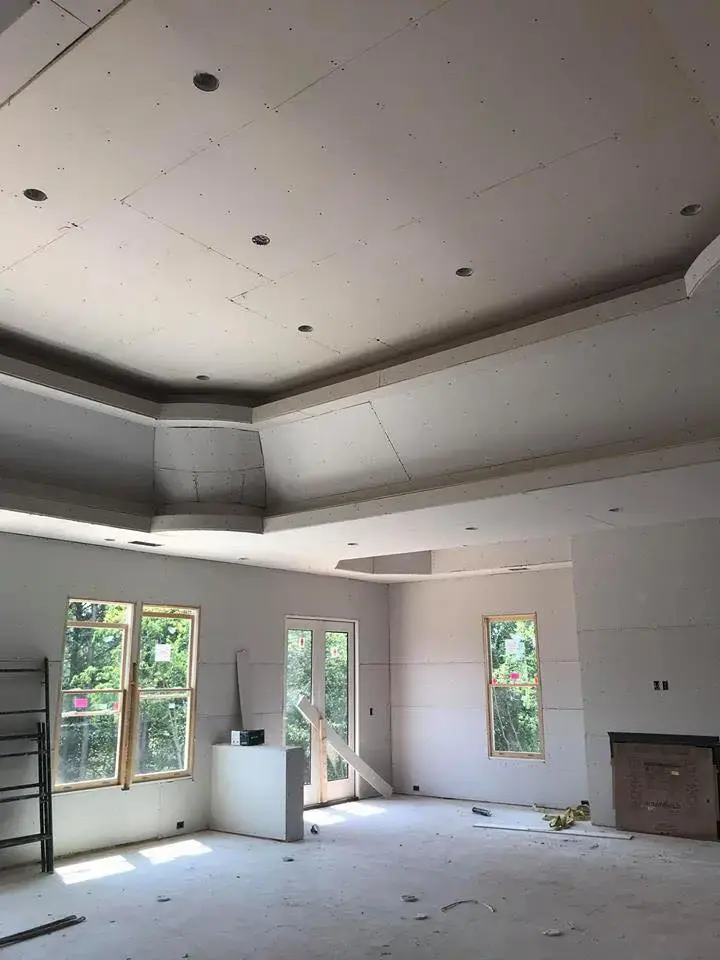
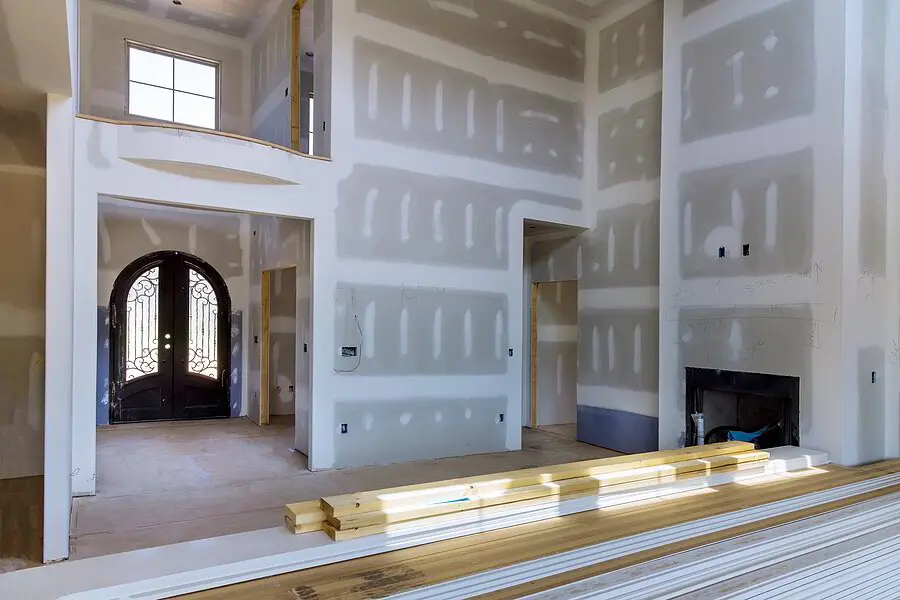
Ceilings take longer than walls: sheets are heavier to lift overhead, and finishing upside down is slower. Vaulted ceilings, stairwells and tall entryways need scaffolding or lifts. Expect ceilings to make up a bigger share of a quote than their area suggests.
Layout complexity
A plain rectangular room is efficient. Costs rise with:
- Many corners, soffits, niches and arches
- Lots of windows and doors to trim around
- Curved walls
- Tight access, such as small closets or upper floors with narrow stairs
Demolition, disposal and prep
If old drywall or plaster has to come out first, that's additional labour plus disposal. Other prep can include:
- Removing damaged insulation after a leak
- Adding furring strips to concrete block walls so drywall can be attached
- Adding blocking for cabinets, grab bars or TV mounts
- Coordinating with electricians and plumbers so rough-in work is done before board goes up
Our guide on preparing your home for drywall installation covers how to get the space ready.
Florida-specific considerations
- Moisture. Framing and insulation must be dry before drywall goes up, especially after water damage. Closing in damp cavities invites mold.
- Humidity and drying time. Joint compound dries slowly in humid weather, which can extend finishing time. Running the AC helps.
- Block construction. Many exterior walls are block, which affects how drywall is attached.
- Older homes. If you're removing popcorn ceilings or old textured surfaces in a home built before the mid-1980s, test for asbestos before demolition.
How to get comparable quotes
Give every contractor the same information:
- Room dimensions and ceiling height
- Which board type in each area
- Finish level and texture
- Whether demolition and disposal are needed
- Whether priming and painting are included
Ask whether the price is fixed, how dust will be controlled, and what warranty applies.
Getting started
A note on who does what: The Patch Guyz are a drywall patch and repair company, so we don't hang new drywall for garages, lanais, additions or remodels. For that work, get quotes from a drywall installer or general contractor and use the checklist above to compare them. Where we help is the damage side: our damaged drywall replacement service cuts out and replaces water-damaged or broken sections of existing walls and ceilings, and our patch finishers tape, texture and blend those repairs into the surrounding surface. We work across six counties, including Polk, where you can find our Lakeland drywall contractors page. Send photos of the damage to 727-242-8500 for a free virtual estimate on the repair; our written quote is the final price.