
Most home improvement checklists assume four seasons: clean the gutters in autumn, worry about frozen pipes in winter. Tampa Bay runs on a different clock — a mild, drier stretch through winter and spring, then hurricane season and the humid, stormy summer.
Planning your projects around that rhythm saves money and stress. Here's a home improvement calendar built for Tampa Bay, with a focus on the parts of the house that take the most punishment: roofs, AC systems, and the interior walls and ceilings that show when something goes wrong.
Winter (December to February): the planning window
Cooler, drier weather makes this the most comfortable time for indoor projects that involve open windows, drying time or a lot of trips in and out.
Good projects for this season:
- Interior painting. Lower humidity helps paint and joint compound dry properly.
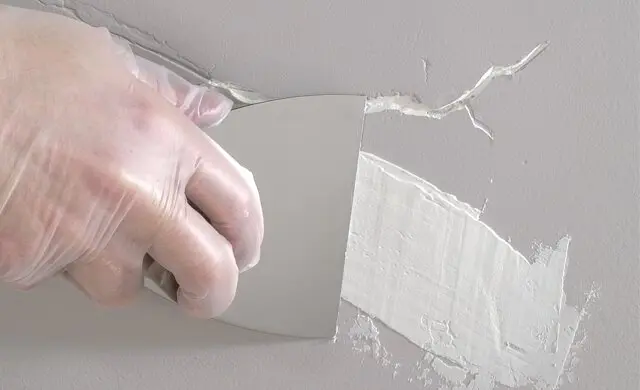
- Drywall and ceiling repairs. Fix last summer's stains, cracks and nail pops while conditions are ideal.
- Popcorn ceiling removal. If your home was built before the mid-1980s, arrange an asbestos test first, then schedule the work while it's comfortable to keep the house closed up.
- Planning bigger renovations. Book contractors early for spring, before demand picks up.
Quick checks:
- Look over ceilings for faint stains you missed during the busy summer
- Test smoke and carbon monoxide detectors
- Check caulk around tubs and showers
Spring (March to May): get ahead of the storms
This is the last comfortable window before the heat and the start of hurricane season on June 1.
Priority projects:
- Roof inspection. Have loose shingles, cracked tiles, flashing and roof penetrations checked.
- Window and door seals. Wind-driven rain finds gaps around windows and sliders. Reseal where caulk has cracked.
- Exterior stucco and block. Hairline cracks in stucco let water reach block walls and, eventually, interior drywall.
- AC service. Have the system serviced and the condensate drain line cleared before it starts running hard.
- Interior repairs. Finish any drywall work now, so you're not waiting for a crew after a storm when everyone is busy.
Early summer (June to July): hurricane readiness
With the season under way, focus on preparation and early detection.
- Photograph every room, including ceilings, for insurance records
- Store spare paint labelled by room and colour so you can touch up after repairs
- Know where your main water shut-off is
- Keep a moisture meter or simply check ceilings under the attic after heavy rain
- Trim trees and secure outdoor items
Indoors, keep the AC running steadily and keep humidity in check. Homes left closed and unconditioned in summer can develop musty odours, mold on walls and peeling paint quickly.
Late summer (August to October): watch for water
Peak storm months bring the heaviest rain. The sooner you catch a leak, the smaller the repair.
After any big storm:
- Walk the house and look up. New stains, bubbled paint or sagging spots on ceilings point to roof or attic issues.
- Check around windows and exterior doors for damp drywall or swollen baseboards.
- Look in the attic if you can do so safely, especially around the AC air handler and drain pan.
- Photograph anything you find before cleanup.
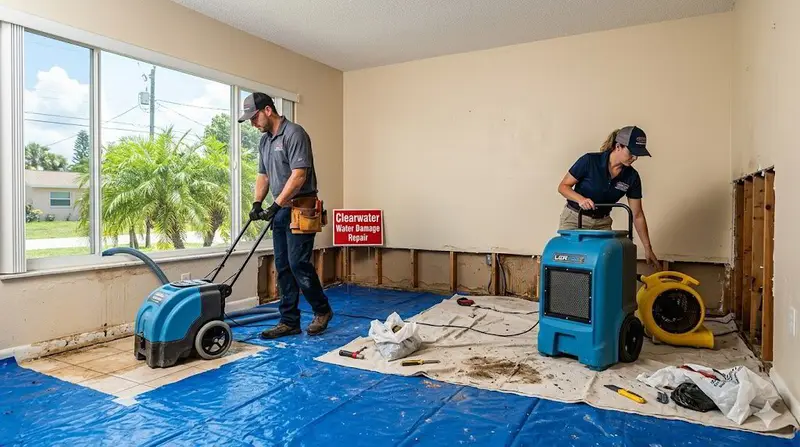
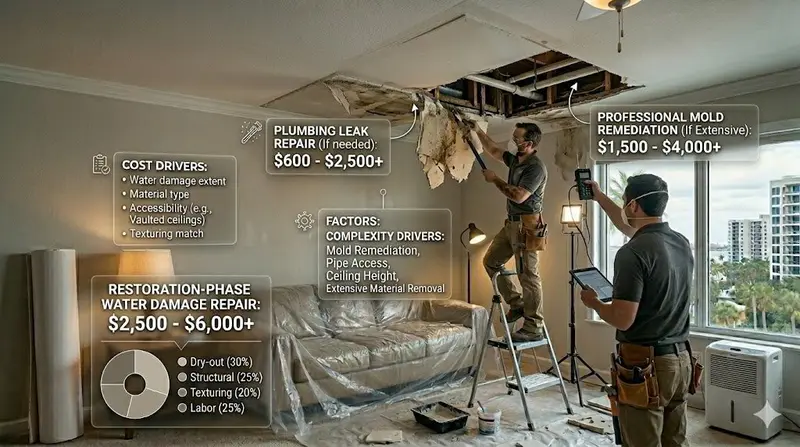
If water gets in, stop the source, dry the area thoroughly with fans and the AC, and remove soaked drywall and insulation promptly. Our guide to water damage repair for Clearwater homeowners explains what to do in the first days.
Autumn (November): recovery and repair
As the season ends, it's time to repair anything storms left behind before winter guests arrive.
- Replace ceiling sections damaged by leaks
- Repair drywall opened for plumbing or AC work during summer
- Repaint walls touched by repairs
- Schedule any bigger interior projects for the drier months ahead
Year-round habits that protect your walls
- Keep indoor humidity under control with steady AC use and bathroom exhaust fans
- Clear the AC condensate line every few months
- Use door stops to prevent doorknob holes
- Fix small cracks and holes when they appear, before they need bigger repairs
- Keep receipts and photos of all repairs for insurance and resale
DIY or professional?
Small tasks like caulking, changing AC filters and patching nail holes are good DIY jobs. Roof work, electrical upgrades, structural repairs and anything involving possible mold or asbestos should go to qualified professionals. Drywall sits in between: small patches are fine to try, while ceilings, texture matching and water-damaged sections are better left to a specialist.
Help from The Patch Guyz
We focus on the interior side of home improvement. Our wall and ceiling repair service handles everything from cracks to storm and roof-leak damage on ceilings, and if your AC installer had to open a wall or ceiling, our repairs after HVAC work service closes it up and matches the finish. We're based in Clearwater and work throughout Pinellas County and five neighbouring counties. Text a photo to 727-242-8500 for a free written estimate.