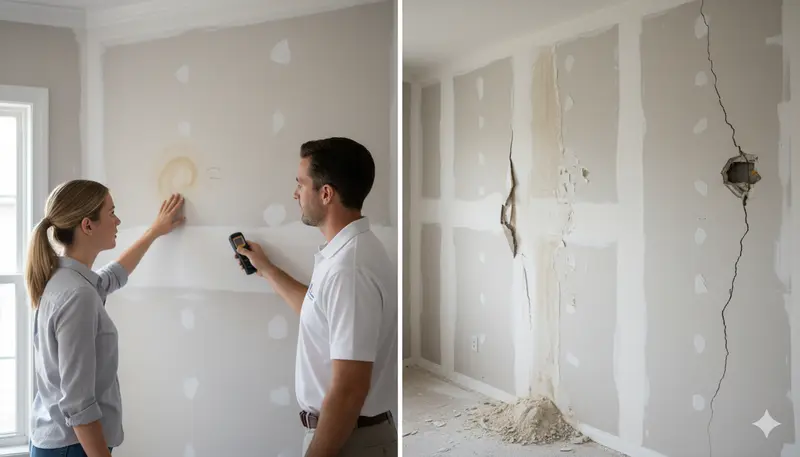

A tenant hands back the keys, or the listing photographer is booked for next Thursday. Either way you walk through the house and see it with fresh eyes: anchor holes where a TV was mounted, scuffs along the hallway, a scraped corner by the garage door, and that faint ceiling stain everyone stopped noticing.
For landlords, property managers and sellers across Tampa Bay, wall restoration is about spending where buyers and renters actually look. This guide covers how to triage the work, what to fix first, and how to keep the turnaround short.
Why walls matter so much at turnover
Walls and ceilings make up most of what you see when you step into a room. Small defects read as neglect, and neglect makes people wonder what else has been skipped — the roof, the AC, the plumbing.
Two things are especially worth getting right in Florida:
- Ceiling stains. Buyers and inspectors here are alert to water intrusion. Even an old, dry stain invites questions about roofs, AC drain lines and storm damage.
- Soft or bubbled drywall near bathrooms, exterior doors and windows. It suggests moisture, and moisture suggests mold.
Clearing those up, with documentation of the cause being fixed, removes an easy objection.
Triage: sort the damage into three groups
Walk every room with a roll of painter's tape and a notepad. Mark each defect and sort it.
Must fix
- Holes of any size, including doorknob punctures and anchor holes from wall-mounted TVs
- Water stains, sagging ceiling sections or soft drywall
- Cracked or dented corner bead on outside corners
- Patches from previous repairs that show through the paint
Should fix
- Nail pops and visible screw heads
- Hairline cracks at seams or above doors
- Heavy scuffs and marks that won't wash off
Optional
- Dated textures, including popcorn ceilings
- Full-room repaints in neutral colours where the paint is still sound
The first group affects inspections and first impressions. The second group is quick and inexpensive when done in the same visit. The third depends on your market and timeline.
A note on popcorn ceilings
Popcorn ceilings can make a home feel dated in listing photos, but treat them carefully. In homes built before the mid-1980s, the texture may contain asbestos. Have it tested before anyone scrapes, sands or patches it. If the test is clear, removal and a smooth or light-textured finish can be a worthwhile pre-sale upgrade. If it isn't, leave it undisturbed and talk to a qualified abatement contractor.
Doing it in the right order
Restoration goes smoothest when trades follow a sensible sequence:
- Fix leaks and moisture sources (roof, AC, plumbing)
- Complete any electrical or plumbing work that opens walls
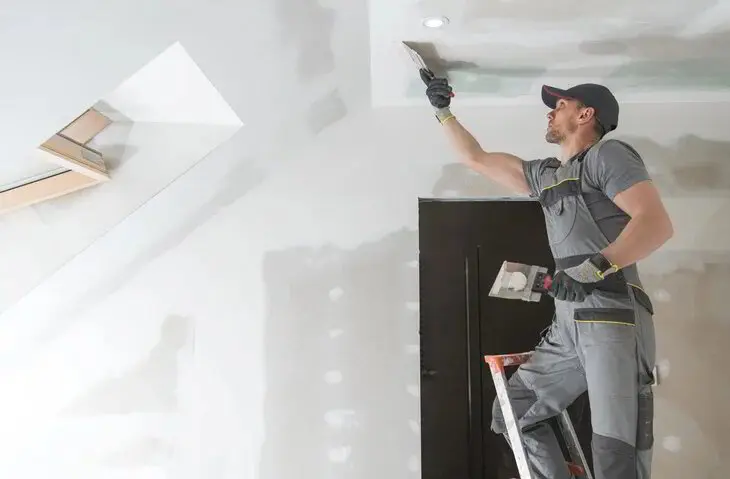
- Drywall and plaster repairs, including texture matching
- Prime repaired areas
- Paint
- Flooring and final cleaning
Getting drywall done before paint is obvious, but people often schedule flooring first and then worry about dust. Good repair crews use plastic sheeting and HEPA dust control, but finishing walls before new floors go down is still the safer plan. For a deeper checklist of the paint stage, see our guide on what to do before interior painting.
Matching texture so repairs disappear
Most Tampa Bay homes have some texture on walls or ceilings — orange peel and knockdown are common. A smooth patch on a textured wall stands out in raking afternoon light and in listing photos taken with wide-angle lenses. Texture should be matched as part of the repair, not left for the painter.
Keeping costs predictable
Turnovers are time-sensitive and margins matter. To keep the budget under control:
- Bundle everything into one visit. One crew, one setup, one cleanup.
- Get the scope in writing. List every repair and whether paint is included.
- Use photos. Text pictures of each area for a virtual estimate rather than waiting for site visits.
- Keep paint records. Note the brand, colour and sheen used in each room so touch-ups match next time.
The Patch Guyz work with homeowners, landlords, property managers and real estate agents. Our written quote is the final price, and we walk the property with you (or your agent) before payment.
Between tenants: reducing damage next time
A few small changes cut down on repeat repairs:
- Install door stops and handle bumpers
- Provide adhesive picture hooks or a picture rail to reduce anchor holes
- Use a scrubbable eggshell or satin paint in hallways and kids' rooms
- Check AC drain lines and bathroom exhaust fans at every turnover
When the damage is more than cosmetic
If you find soft drywall, persistent stains or a musty smell, look further. Our guide to identifying drywall damage explains the warning signs. For hands-on help, our wall and ceiling repair service covers everything from anchor holes to replaced ceiling sections, and our painting prep team gets surfaces ready for a clean, even coat. Property owners in Pinellas can also see our St. Petersburg drywall services.